PODCAST: The Big Lie of Dry Dropper, S19 – Ep3 (VIDEO and AUDIO)

by | May 4, 2026 | 5 comments

 The Troutbitten Podcast is now available on YouTube as a video podcast, along with the audio podcast platforms.

** Note **  The YouTube video is embedded below, followed by the the podcast player and links to your favorite podcast platforms.

Dry dropper is great. Just put a nymph under that dry fly and get the best of both worlds. Right? Not so fast . . .

The idea that you can have your cake and eat it too — that you’ll get perfect drifts on the dry fly and the nymph — and that you somehow double your chances by dropping a nymph under the dry is not true. This is the big lie of dry dropper fishing.

Here’s the problem: In most cases, neither fly ends up with a great drift. Instead, both flies are compromised and their natural drift is altered. Picky trout don’t buy sub-par drifts, so you’ll only pick up the occasional lucky trout.

But we can have good fishing with a dry dropper rig. It’s a go to choice for a many anglers, and it’s one of our favorite ways to fish a river.

The point here is to acknowledge the problems with a dry dropper system — the inherent drawback — so we can then specifically deal with them or even get rid of them altogether. Know the problem and try to solve it.

My good friends Bill Dell, Trevor Smith, Josh Darling, Austin Dando and Matt Grobe are here with me to talk about . . . the big lie of dry dropper.

Resources

READ: Troutbitten | Three Styles of Dry Dropper
PODCAST: Troutbitten | Three Styles of Dry Dropper – Dry Dropper Skills Series

Here’s the video . . .

(Please select 4K or for best video quality)

If you enjoy this video, the best way to support the effort is to like the video, leave a comment and subscribe on YouTube.

Here’s the Audio Podcast . . .

Listen with the player above, or . . .

Find the Troutbitten podcast on any of these services:

— Apple Podcasts
— Spotify
— Google Podcasts
— Amazon Music
. . . and everywhere else where you listen to podcasts.

You can find the dedicated Troutbitten Podcast page at . . .

podcast.troutbitten.com

Season 19 continues next week. So look for that in your Troutbitten podcast feed.

Fish hard, friends.


** Donate ** If you enjoy this podcast, please consider a donation. Your support is what keeps this Troutbitten project funded. Scroll below to find the Donate Button. And thank you.


Enjoy the day.
Domenick Swentosky
T R O U T B I T T E N
domenick@troutbitten.com


Share This Article . . .

Since 2014 and 1500+ articles deep
Troutbitten is a free resource for all anglers.
Your support is greatly appreciated.

– Explore These Post Tags –

Domenick Swentosky

Central Pennsylvania

Hi. I’m a father of two young boys, a husband, author, fly fishing guide and a musician. I fish for wild brown trout in the cool limestone waters of Central Pennsylvania year round. This is my home, and I love it. Friends. Family. And the river.

More from this Category

Lane, Depth and Speed – What Matters Most In a Nymph Drift (VIDEO)

Lane, Depth and Speed – What Matters Most In a Nymph Drift (VIDEO)

When a nymph disappears under the surface, it’s easy to settle for a drift that’s merely good enough . . . but we shouldn’t. Underwater currents are complex, and a convincing nymph drift depends on three things: lane, depth and speed. No matter the rig — tight line or indicator, Mono Rig or fly line — we must understand what the nymph is doing and make deliberate choices about its path. And while all three elements matter, trout are more particular about some drift qualities than others. In this video, I break down each element and rank them by importance, with one goal in mind: better dead drifts and more consistent fishing.

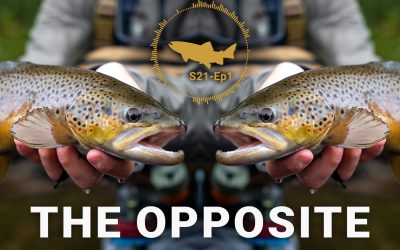
PODCAST: Doing the Opposite – S21, Ep1 (VIDEO and AUDIO)

PODCAST: Doing the Opposite – S21, Ep1 (VIDEO and AUDIO)

My friends are here with me to begin season twenty-one with a conversation about doing the opposite. Because if you’re struggling out there on the water, if the net hasn’t been wet in a while and the trout seem to disagree with everything you suggest, then maybe you should do the opposite.

To quote Jerry Seinfeld’s advice to George . . . “If every instinct you have is wrong, the opposite would have to be right.”

UPDATE ON EVENT: The Troutbitten Film Festival

UPDATE ON EVENT: The Troutbitten Film Festival

Troutbitten is hosting a Film Festival at New Trail Brewing Company in Williamsport, Pennsylvania, and we want you to be there. We’ll gather to share fishing stories, a few beers and good times. The event will feature door prizes with gear from many of the best companies in the fly fishing world, and we’ll have awards for some of the selected films.

The Troutbitten Film Festival features genuine experiences. It’s about the woods and the water. It’s about wild places. It’s about the friendships and stories we all collect from a life on the water. It’s not about exotic locations. It’s not a big fish contest or a big camera contest. If you’re resourceful, you can create something beautiful and endearing for the Troutbitten Film Festival with your iPhone.

Building the Troutbitten Mono Rig – Reels, Lines, Materials, Connections and Knots (VIDEO)

Building the Troutbitten Mono Rig – Reels, Lines, Materials, Connections and Knots (VIDEO)

For over a decade, I’ve written and talked about fishing a Mono Rig for all underwater presentations — nymphs with and without an indicator, with and without split shot, dry dropper, streamers of all shapes and sizes and even pure dry flies.

I’ve detailed the formulas for my favorite leaders in many places, but I’ve never put everything together from the ground up. This video answers the most frequent questions about reels, fly lines, leader connections, materials and knots. No matter what tight line leader you choose to build, the principles shown here apply.

Fishing With Visible Flies — Learning From What You Can See (VIDEO)

Fishing With Visible Flies — Learning From What You Can See (VIDEO)

Seeing the fly is one of the most enjoyable aspects of fishing. But there’s a world of education inherent, too. Watch the fly dance and fall as it mixes with the currents. Notice how it responds to rod tip animation and line strips. Then see a trout materialize around the fly and judge its reaction. Visible flies are teachers. Whether dries, wets, nymphs or streamers, watching the fly helps us refine the techniques that catch fish.

What do you think?

Be part of the Troutbitten community of ideas.
Be helpful. And be nice.

5 Comments

  1. I’m not the greatest fly fisherman, but I don’t understand the use of fluorocarbon. I personally can’t see a difference between that and nylon. What am I missing?

    Reply
    • So I don’t know if you’re missing anything. But there’s no doubt to me that fluorocarbon is more abrasion resistant. It’s tougher. That’s why I use it underneath.

      Reply
  2. These podcasts are a great idea but they need to be shortened. It is tough to have the time and stay engaged for over an hour. You could break these up into smaller segments like 15-20 minutes and a lot more people would watch and learn.

    Reply
    • Thanks for your input. The podcast has done really well for about five years in this format. If you don’t have more than twenty minutes at a time, just hit stop and come back later, right? Every podcast player out there has a resume feature.

      Reply
  3. Hmmmm….., Dom and crew, isn’t a dry dropper simply an indicator with a hook? I’ve used this system early on in my evolution of attempting to master my growth from knuckle-dragger [sic?] to a fluid fly fisher and have outgrown the desire to use it. It simply isn’t effective used as a dual attractor. But yet, I have had numerous strikes on a dorsey….. So my question,
    How does the dropper affect the drift of a nymph differently from an indicator, or does it…, really??

    Reply

Submit a Comment

Your email address will not be published. Required fields are marked *

Recent Articles

Recent Posts

Domenick Swentosky

Central Pennsylvania

Hi. I’m a father of two young boys, a husband, author, fly fishing guide and a musician. I fish for wild brown trout in the cool limestone waters of Central Pennsylvania year round. This is my home, and I love it. Friends. Family. And the river.

Pin It on Pinterest