Articles With the Tag . . . dry fly fishing

Fishing With Visible Flies — Learning From What You Can See (VIDEO)

Seeing the fly is one of the most enjoyable aspects of fishing. But there’s a world of education inherent, too. Watch the fly dance and fall as it mixes with the currents. Notice how it responds to rod tip animation and line strips. Then see a trout materialize around the fly and judge its reaction. Visible flies are teachers. Whether dries, wets, nymphs or streamers, watching the fly helps us refine the techniques that catch fish.

Fish and Film – Dry or Die (VIDEO)

Every summer I fish dry flies more than anything else. This year, without really planning on it, that’s all I’ve fished. I haven’t touched a nymph or a streamer for about two months now. It’s been dry fly or die.

Summers are my off season from guiding, but life gets complicated. There’s all the branches of the Troutbitten Project to keep up with, and rest of life creeps in too. It all gets mixed together. It get’s too cluttered. And maybe simplifying my flies and tactics is a response to all that.

Can You Force-Feed Trout Big Dries? I Want to Believe

I’ve spent the better part of my summer testing a theory. Will the wild brown trout in my home waters eat a big dry fly? More specifically, will they eat it regularly? And for the trout that do fall for an extra-large fly, is their average size large to match?

Dry Flies In Fast Water – Fly Fishing Tips (with VIDEO)

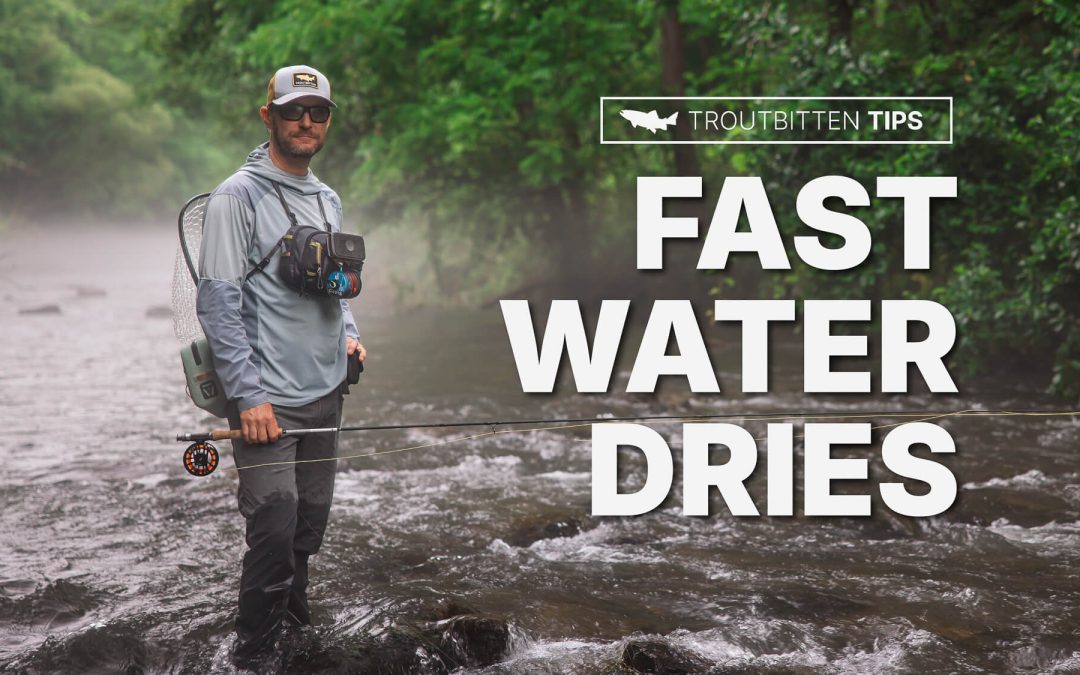
Here’s a look at fishing dry flies in faster water — in more complex currents — because there’s a unique set of skills to get true dead drifts in the fast water and pocket water. The drifts are shorter and harder to achieve. But some of the best fish hang out in faster stuff, and if you give them a great presentation you have a really good chance.

In this video, I cover three main skills that help meet the particulars of fishing dry flies in fast water. Those skills are also detailed below the video, in the article, with links to further Troutbitten resources.

Fish and Film – Dry or Die (VIDEO)

Fish and Film – Dry or Die (VIDEO)

** VIDEO APPEARS BELOW ** Fishing is a story . . . Every summer I fish dry flies more than anything else. This year, without really planning on it, that's all I've fished. I haven't touched a nymph or a streamer for about two months now. It's been dry fly or die....

Where’s My Fly?

Where’s My Fly?

Understanding the fly’s position — where it is and where it’s going — is the key challenge in fly fishing. And aside from basic casting skills, an awareness of the fly in the current is the most essential skill.

read more
Rain-X  As A Pre-Treatment

Rain-X As A Pre-Treatment

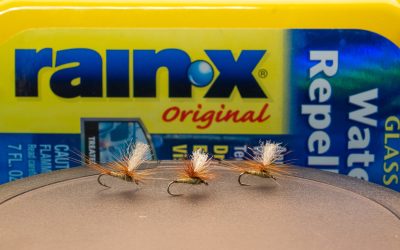
I apply Rain-X to all dry flies that leave my vise, if they don’t have CDC. I do the same with my yarn indicators. A simple drop of Rain-X dries completely in a few hours, leaving behind an unseen film of silicone that goes a long way to waterproofing materials for the river. I’m surprised more anglers don’t know about this. And no, Rain-X is not toxic after it dries.

read more
VIDEO/PODCAST: In Deep — Dry Fly Leader Design with John Shaner

VIDEO/PODCAST: In Deep — Dry Fly Leader Design with John Shaner

Our first In Deep guest is my friend, John Shaner. With a career spanning five decades, Shaner has worked for influential companies like Hardy and Cortland, while connecting with seemingly every fishy angler in the industry. Shaner is widely regarded for his technical fly fishing skills and encyclopedic, historical knowledge of both traditional and modern tactics.

In this conversation, John Shaner and I go In Deep on dry fly leader design. John and I share a similar philosophy, with just a few individual twists on the overarching principles.

Sincere thanks to John Shaner, for a fantastic conversation.

read more
Fish and Film – Tight Line to the Indicator Nymphing – Broken Hand Suspenders (VIDEO)

Fish and Film – Tight Line to the Indicator Nymphing – Broken Hand Suspenders (VIDEO)

Late summer trout fishing in the Northeast can be challenging. But I’ve had good mornings by choosing cold water and staying open minded to the trout’s patterns and habits. Surprisingly, the best fishing has been found in deep, slow water that still has flow. The dry fly bite has been off, but the nymph fishing has been excellent.

read more

Pin It on Pinterest