For this episode, we talk about the differences of fishing in the east and west. From the water types to the trout, from the access, to wading vs floating, from the fly shops and to the people themselves. The waters you fish dictate your experience.
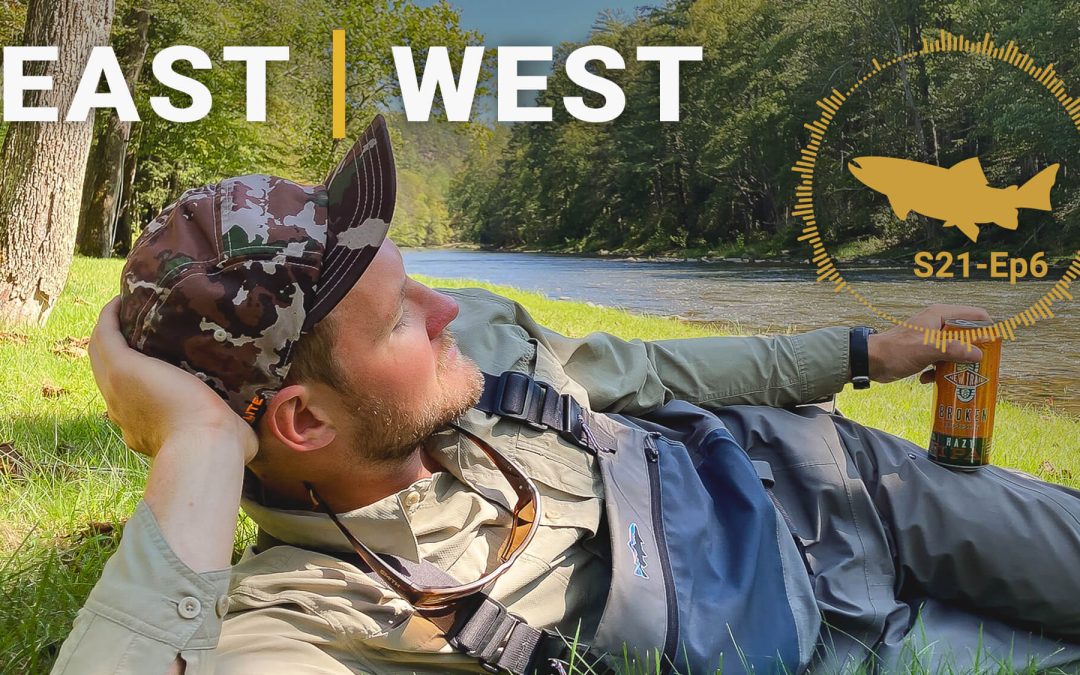


For this episode, we talk about the differences of fishing in the east and west. From the water types to the trout, from the access, to wading vs floating, from the fly shops and to the people themselves. The waters you fish dictate your experience.

Surely, the most common advice for fooling more selective fish is to go smaller with the pattern. Often that’s a good strategy that meets the moment . . . but not always.
When we do want to fish smaller flies, how do we go about it? The fact is, larger flies drift differently. Heavier flies can get down more quickly. And getting a #18 into the strike zone really requires a different strategy.

When you fish long enough, you also encounter the special things, the unique things, the stuff that maybe only you’ve seen, you’ve heard or maybe you’ve felt out there. So we want to share a few of those river stories tonight.

This podcast is all about about your waders — wader care and wader repair. You might think that if you take care of your waders, they’ll last forever, but that’s surely not true. All of us in this conversation have been fishing long enough to have gone through many, many waders. We’ve also been in the game long enough to know how to patch waders. I’m constantly surprised by how many anglers tell me they got a pinhole in their waders, so they sent them back. That’s not how it used to be. Every die hard angler that I knew used to have a good supply of Aquaseal and they knew how to use it.
So here are our thoughts and experiences about taking care of your breathable waders and patching them effectively when the inevitable happens.

This one is all about fishing nets. We cover net types and sizes, handle length, bag depth and hoop width. We also discuss how each of us carries the net and how we access it quickly. Because if all of this is not well thought out, problems are sure to follow.
My friends are here with me to begin season twenty-one with a conversation about doing the opposite. Because if you’re struggling out there on the water, if the net hasn’t been wet in a while and the trout seem to disagree with everything you suggest, then maybe you should do the opposite.
To quote Jerry Seinfeld’s advice to George . . . “If every instinct you have is wrong, the opposite would have to be right.”
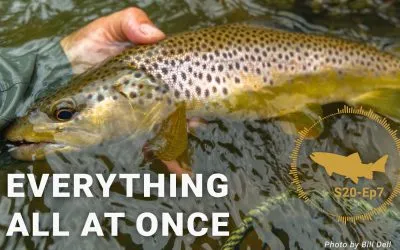
The season 20 finale covers small water, shallow water, drag settings, strip sets, locations, and using the rod to control the fish.
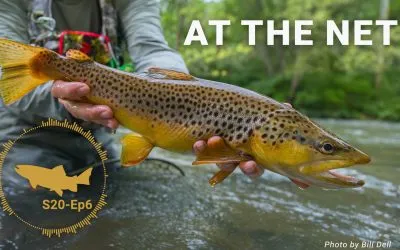
This podcast is all about the the end of the fight, where the fish is within range and just about ready for the scoop. A lot can go wrong at the end of a fight, so there’s a lot that needs to be done right . . .

Side pressure puts real leverage on a fish. It’s where control begins and power originates. All the other skills before this one set us up to maximize side pressure, with the right angles and a great plan for landing the trout of a lifetime . . .
Fighting trout in a river, creek or stream is all about the currents. So for this episode of our seven part skills series on fighting big fish, we talk about fighting fish upstream, downstream or across. What are the advantages and disadvantages of each angle? And what about current depth? Should we aim to fight the fish in the lower, middle or top part of the water column? And finally, we talk about the fighting zones in a river, meaning, what types of water are a safe choice for fighting the biggest trout of your life?
Fighting trout in a river, creek or stream is all about the currents. So for this episode of our seven part skills series on fighting big fish, we talk about fighting fish upstream, downstream or across. What are the advantages and disadvantages of each angle? And what about current depth? Should we aim to fight the fish in the lower, middle or top part of the water column? And finally, we talk about the fighting zones in a river, meaning, what types of water are a safe choice for fighting the biggest trout of your life?