The “Sisters” nymph platform doesn’t ask a trout to buy anything more than what they’re already used to. It’s an excellent, convincing nymph when trout don’t want to be curious but just eat natural, safe flies.
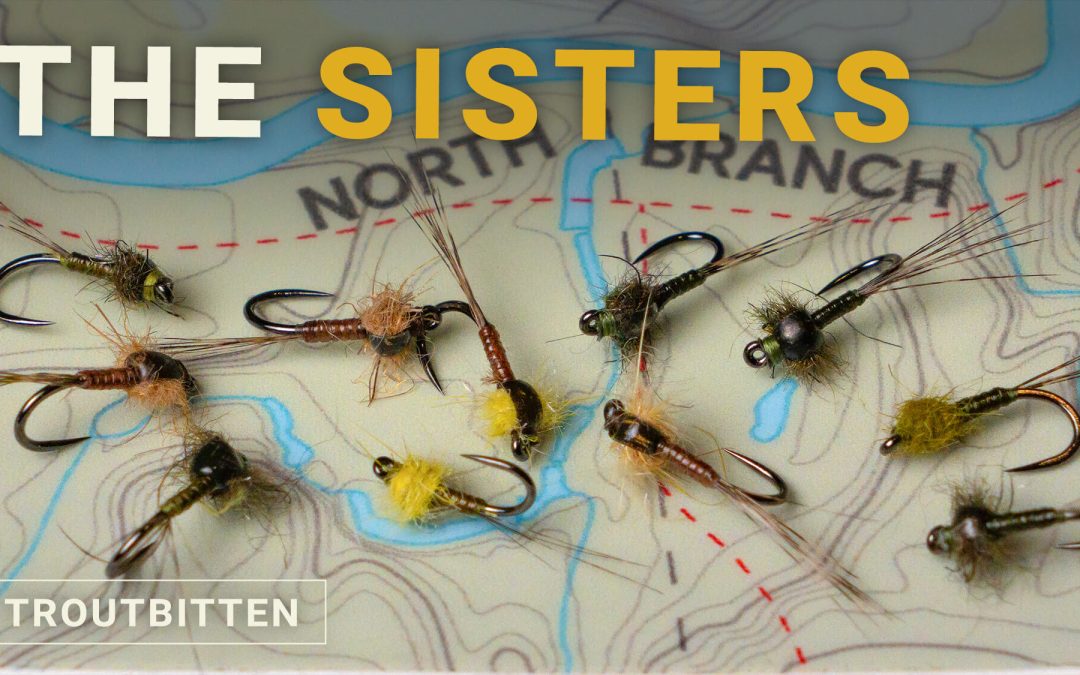


The “Sisters” nymph platform doesn’t ask a trout to buy anything more than what they’re already used to. It’s an excellent, convincing nymph when trout don’t want to be curious but just eat natural, safe flies.
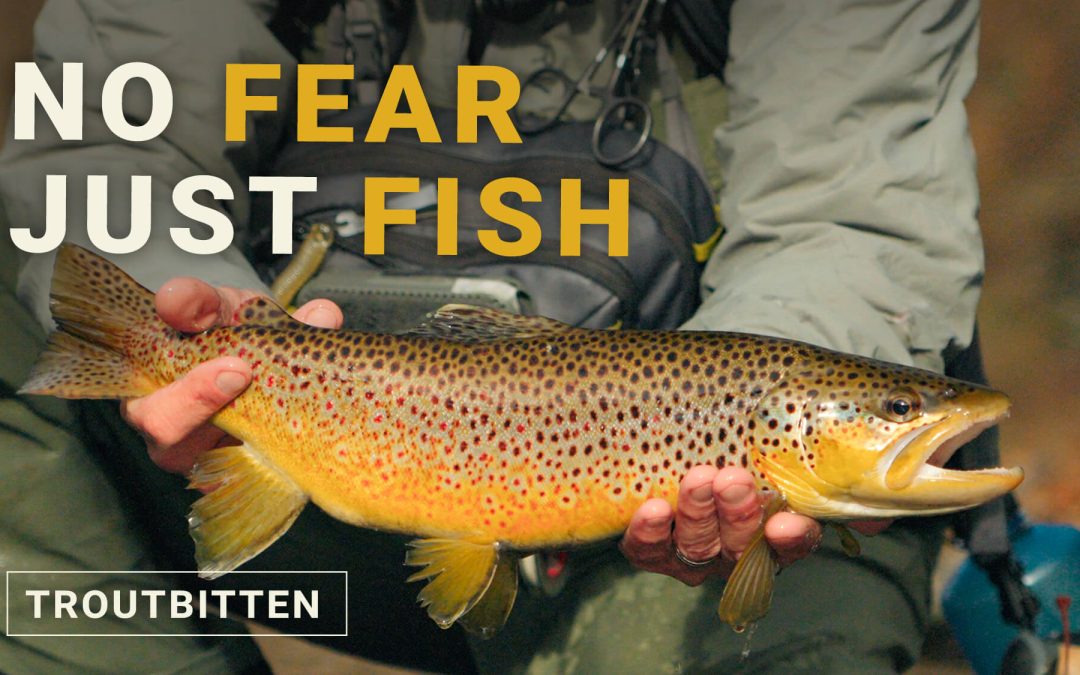
With a nymph, most trout are caught near the bottom. That’s not a surprise. Most of the good things in a river happen near the riverbed. That’s where the bugs and baitfish live. And nothing solves the problems of nymphing better than getting lower for longer.

Surely, the most common advice for fooling more selective fish is to go smaller with the pattern. Often that’s a good strategy that meets the moment . . . but not always.
When we do want to fish smaller flies, how do we go about it? The fact is, larger flies drift differently. Heavier flies can get down more quickly. And getting a #18 into the strike zone really requires a different strategy.

I use a ten-inch hook set — fast not far — at the end of every drift. And I use this for all underwater presentations. This is not just about setting the hook. Instead, this simple motion — this quick lift up and over — gets the fly activated. It releases surface tension and gets the fly moving, preparing it for the backcast.

I’d like to show you my basic steamer approach. There are a lot of animations that I give to a streamer — a lot of looks. And I use plenty of different fly patterns too. I have my favorite leader and even my favorite water types. But there are a few things that I think are more important than any of that.
So let’s get to the basics. I’ll show you some of the guiding principles for how I fish streamers. Some of this is a little different — not exactly mainstream.

When a nymph disappears under the surface, it’s easy to settle for a drift that’s merely good enough . . . but we shouldn’t. Underwater currents are complex, and a convincing nymph drift depends on three things: lane, depth and speed. No matter the rig — tight line or indicator, Mono Rig or fly line — we must understand what the nymph is doing and make deliberate choices about its path. And while all three elements matter, trout are more particular about some drift qualities than others. In this video, I break down each element and rank them by importance, with one goal in mind: better dead drifts and more consistent fishing.
For over a decade, I’ve written and talked about fishing a Mono Rig for all underwater presentations — nymphs with and without an indicator, with and without split shot, dry dropper, streamers of all shapes and sizes and even pure dry flies.
I’ve detailed the formulas for my favorite leaders in many places, but I’ve never put everything together from the ground up. This video answers the most frequent questions about reels, fly lines, leader connections, materials and knots. No matter what tight line leader you choose to build, the principles shown here apply.
Seeing the fly is one of the most enjoyable aspects of fishing. But there’s a world of education inherent, too. Watch the fly dance and fall as it mixes with the currents. Notice how it responds to rod tip animation and line strips. Then see a trout materialize around the fly and judge its reaction. Visible flies are teachers. Whether dries, wets, nymphs or streamers, watching the fly helps us refine the techniques that catch fish.

Here are specific strategies for targeting edge water, with footage from two trips — one on small water and one on a larger river. I fish nymphs and streamers, changing frequently to suit the conditions.

I use one fly rod for everything. It doesn’t matter if I’m fishing dry flies, nymphs, wet flies or streamers, the rod I leave the truck with is the rod I’m using all day. If you’re locked into the mindset that you need a bunch of fly rods to fish different tactics and flies, think again. I promise, there’s an easy, efficient, effective way to use one rod for everything.
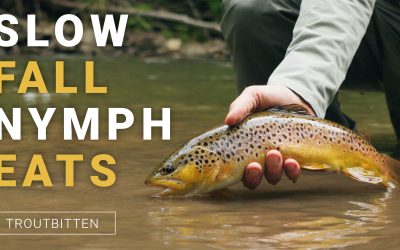
Sometimes, trout eat nymphs on the drop — as the fly is falling or fluttering to the bottom. And when we recognize that, it’s time to make some adjustments to our rig, the presentation and even the water we choose to fish.
This video shows how I fish for trout when their focus for nymphs is out of the strike zone and above them. I cover tracking the flies, floating the sighter, longer casts, power curves, tuck casts, slack to the nymph, strike detection and more. And I walk through all of this while fishing through a favorite section of river.