Articles in the Category Troutbitten Fly Box

PODCAST: Dry Fly Platforms – The Outliers and The Wrap Up – The Troutbitten Fly Box (S18, Ep7)

This Troutbitten Skills Series and these platforms are an effort to pass along the idea that fly selection doesn’t have to be regimented or complicated. Instead, see flies for what they have in common. Find their similarities rather than their differences. Choose the elements that matter most to you. Find the components of a fly that create enough of a distinction to be the keys to a platform, and build around that idea.

(VIDEO) Troutbitten Fly Box: Fur Nymphs – Walt’s Worm as a Platform, Blending Dubbing and More

Buggy flies, guide flies, confidence flies: Fur nymphs are all of that. A fur nymph looks alive, and it’s not overdone. It’s just fur on a hook. These flies aren’t very exciting to look at. The material list is slim. And there’s not much to know about tying them. Anglers may be bored with the spartan form, but trout respond to the simplicity. And there’s a lot of inherent attraction in a fur nymph, with very little to turn a trout off.
PODCAST: Dry Fly Platforms – Hoppers, Stones and Foams- The Troutbitten Fly Box (S18, Ep6)

It’s time for the big-meal dry fly platform: hoppers and stoneflies. With this platform, we substitute subtlety for buoyancy. Hackle is traded in for rubber legs, and dubbing is often replaced by closed-cell foam. In this episode, we break down this big-meal platform. We’ll look at a parts list, cover some pros and cons about material choices, and look at the particulars of the platform itself.

PODCAST: Dry Fly Platforms – Emergers – The Troutbitten Fly Box (S18, Ep5)

A dry fly emerger is one that has part of the fly underneath the surface. It’s a highly effective form (meaning tout eat it) because it matches the most vulnerable state of things that trout see.

In this episode we cover the dry fly platform of emergers. We look at what they are, how and why to use them and the differences in styles within this platform. We cover some history about how emerger design got to this point and what the future might hold.

(VIDEO) Troutbitten Fly Box: Fur Nymphs – Walt’s Worm as a Platform, Blending Dubbing and More

(VIDEO) Troutbitten Fly Box: Fur Nymphs – Walt’s Worm as a Platform, Blending Dubbing and More

Buggy flies, guide flies, confidence flies: Fur nymphs are all of that. A fur nymph looks alive, and it’s not overdone. It’s just fur on a hook. These flies aren’t very exciting to look at. The material list is slim. And there’s not much to know about tying them. Anglers may be bored with the spartan form, but trout respond to the simplicity. And there’s a lot of inherent attraction in a fur nymph, with very little to turn a trout off.

PODCAST: Dry Fly Platforms – Hoppers, Stones and Foams- The Troutbitten Fly Box (S18, Ep6)

PODCAST: Dry Fly Platforms – Hoppers, Stones and Foams- The Troutbitten Fly Box (S18, Ep6)

It’s time for the big-meal dry fly platform: hoppers and stoneflies. With this platform, we substitute subtlety for buoyancy. Hackle is traded in for rubber legs, and dubbing is often replaced by closed-cell foam. In this episode, we break down this big-meal platform. We’ll look at a parts list, cover some pros and cons about material choices, and look at the particulars of the platform itself.

PODCAST: Dry Fly Platforms – Emergers – The Troutbitten Fly Box (S18, Ep5)

PODCAST: Dry Fly Platforms – Emergers – The Troutbitten Fly Box (S18, Ep5)

A dry fly emerger is one that has part of the fly underneath the surface. It’s a highly effective form (meaning tout eat it) because it matches the most vulnerable state of things that trout see.

In this episode we cover the dry fly platform of emergers. We look at what they are, how and why to use them and the differences in styles within this platform. We cover some history about how emerger design got to this point and what the future might hold.

PODCAST: Dry Fly Platforms – Down Wings – The Troutbitten Fly Box (S18, Ep4)

PODCAST: Dry Fly Platforms – Down Wings – The Troutbitten Fly Box (S18, Ep4)

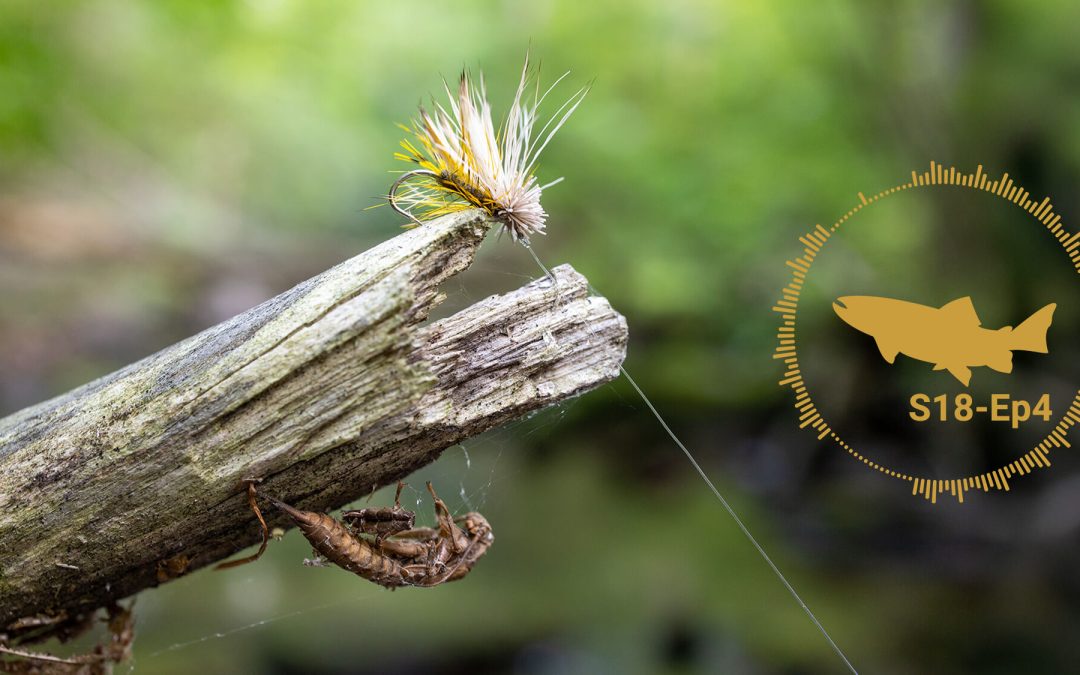
The down wing dry fly style is a perfect match for one of the most ubiquitous insects found in trout rivers across the planet: caddis. The down wing platform is also a first choice for matching many terrestrials, like moths and hoppers, and it finds it’s way to stonefly patterns as well.

But for this discussion, we cover the down wing and its progression into fly boxes, by looking at three standouts: the Elk Hair Caddis, the X-Caddis and the CDC & Elk. Because the arrival of each of these patterns brought forth major innovations to the world of dry flies. All three of these are down wings, but they are very different players on the water.

PODCAST: Dry Fly Platforms – Comparaduns – The Troutbitten Fly Box (S18, Ep3)

PODCAST: Dry Fly Platforms – Comparaduns – The Troutbitten Fly Box (S18, Ep3)

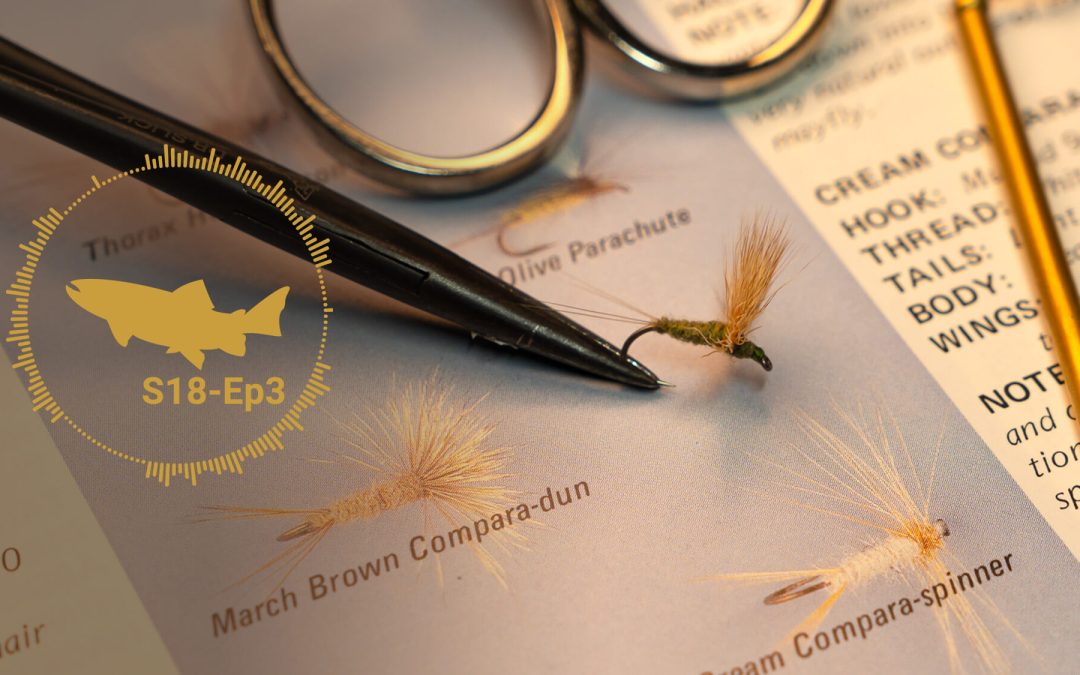
With its simple form of wing, body and tail, the Comparadun is another template for the dry fly angle — another perfectly adaptable platform.

When the Comparadun hit the scene in the 1970’s, it was a significant departure from the norm. Anglers recognized this, but more importantly, the trout recognized this. The Comparadun became a hatch matcher. It became the closer, because the Comparadun specialized in fooling selective trout, with perhaps the most realistic profile of a mayfly out there.

The unique design of the Comparadun caught on quickly, because, once again, it solved problems on the water. And it’s been fooling wise River trout ever since.

PODCAST: Dry Fly Platforms – Parachutes – The Troutbitten Fly Box (S18, Ep2)

PODCAST: Dry Fly Platforms – Parachutes – The Troutbitten Fly Box (S18, Ep2)

The parachute platform is our favorite style of dry fly and the favorite of many other anglers, because of its utility. Because it form is functional. Because it casts well, lands upright and keeps floating, even though heavy water. It fools picky trout and looks enough like an emerger and a spinner that you might get away with one fly, all the way through cycle. It’s a great dry-dropper fly, it’s easily adaptable. And perhaps its best quality . . . you can see the parachute post.

read more
PODCAST: Dry Fly Platforms – Upright Hackles – The Troutbitten Fly Box (S18, Ep1)

PODCAST: Dry Fly Platforms – Upright Hackles – The Troutbitten Fly Box (S18, Ep1)

Season 18 is a unique look at dry fly styles, through the concept of platforms. By taking a fly shape, a form or a set of materials, we can adapt the elements like color, wing style, tailing material or hackle length to meet the moment. Within the fly platform, we vary its properties to the river conditions or to a specific hatch.

In this episode, we look at the specifics for hook, tail, body, wing and hackle for our first platform in this Skills Series — the Upright Hackle.

read more
PODCAST: Fly Tying — Essential Tools and More (S17, Ep9)

PODCAST: Fly Tying — Essential Tools and More (S17, Ep9)

Fly tying is more popular than ever. With the prevalence of high quality materials and excellent videos showing how to build flies, more fly anglers choose to tie their own patterns than ever before.

All of us at Troutbitten have been tying our own flies from the beginning, so we each have preferences for the tools we use. That’s what this podcast episode is all about. We discuss the essentials, like vise, scissors and a bobbin, along with some other tools and gear that each of us considers invaluable for tying materials to a hook.

The tools come first. And the quality of those tools can either help or hinder the process . . .

read more
Confidence Flies: Signals and Changes

Confidence Flies: Signals and Changes

Some anglers lend too much credence to the hatch charts for nymph selection. A nymphing angler must be careful not to take every dry fly concept and principle underneath.

Never forget, what you see on the surface or in the air does not necessarily correlate with the best fly choice under the water. Tan Caddis may be all over the water’s surface, but are they easily available as a nymph to the trout right now? We can’t know that for certain, but we can test the theory . . .

read more

Pin It on Pinterest