Articles With the Tag . . . indicator nymphing

Fish and Film – Fish In a Barrel (VIDEO)

Fishing is a story . . . On a warm winter day, I fished the buckets, because that’s where the trout were. Stick and move. That’s the game of shooting fish in a barrel.

Mono Rig Styles for Tight Line to the Indicator Nymphing

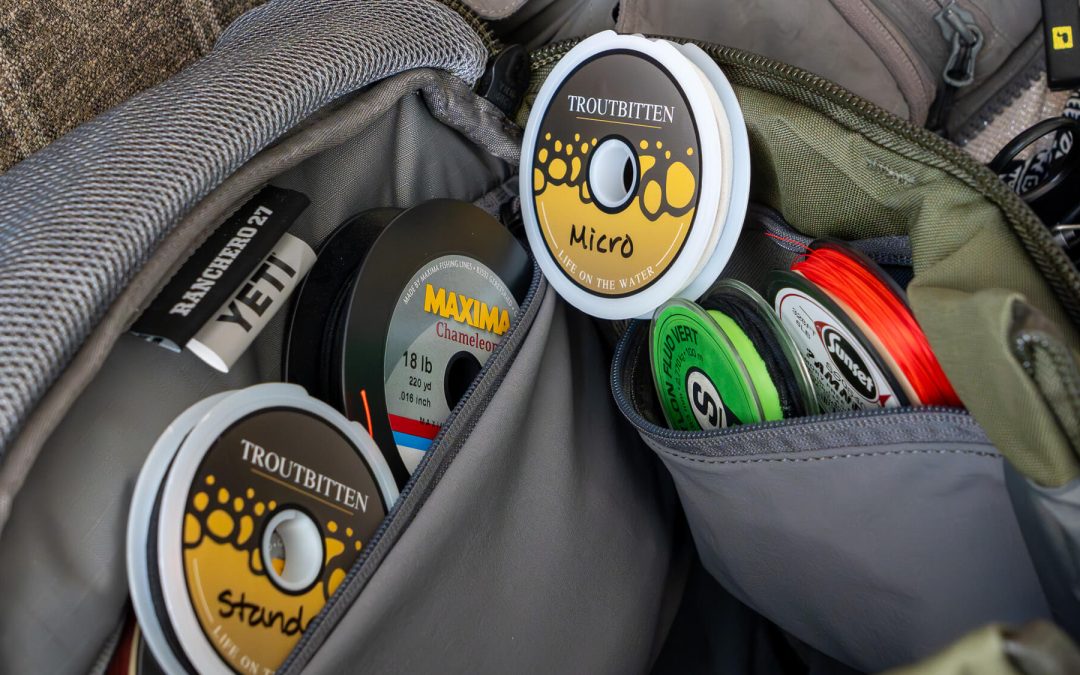
You can fish tight line to the indicator style with a Micro Mono Rig instead of a Standard, but here’s what you’ll be giving up. Here’s what you’re losing . . .

. . . It all starts with a good understanding of the Mono Rig as a HYBRID system. The Standard Mono Rig casts and mends like a fly line, so we use the most unique advantage of fly fishing, introducing slack in the best places . . .

Land With Contact or Without, When Using a Tuck Cast — Tight Line and Euro Nymphing

The tuck cast presents a fly-first entry, from very steep and vertical with extra slack, to almost flat, with immediate contact. That’s how flexible the tuck cast is. It’s useful. In fact, it’s critical to how I present nymphs and streamers.

Your Indicator Is Too Big

Choosing the right indicator is the first step to setting up and effective system. Balance between indy and weight is the key.

Your Indicator Is Too Big

Your Indicator Is Too Big

** This Troutbitten article was originally published to Hatch magazine. ** Floating a couple of nymphs under an indicator is undeniably effective. In the right place and with the right conditions, flies under an indicator will outperform a tight line presentation all...

The Hop Mend (with VIDEO)

The Hop Mend (with VIDEO)

Mending is a skill unique to fly fishing. And good mending seems to elude all but the best anglers. Bad mending is hard to watch, because it does more harm than good — actually introducing drag and hurting the natural drift of a fly. But skillful mending extends...

Podcast Ep 12: Nymphing Tight Line to the Indicator Style — Contact Nymphing Principles with an Indy

Podcast Ep 12: Nymphing Tight Line to the Indicator Style — Contact Nymphing Principles with an Indy

When it’s the best tool for the job, then putting an indy on a tight line rig is a deadly variation to a contact nymphing system. I build my leader to be ready for it. The rod I carry is designed for it. Because tight line to the indicator is a problem solving approach that gets the job done when pure tight lining simply cannot . . .

read more
How the Bobber Hurts a Fly Fisher

How the Bobber Hurts a Fly Fisher

Don’t be a bobber lobber. Bobbers are an amazing tool in certain situations. But learn to cast it with turnover first. Avoid the lob.

Instead of using the bobber as a shortcut to getting the line out there, first learn a good casting stroke — with speed, crisp stops and turnover. Then, attach the bobber and see the supreme advantage gained when the fly hits first and the bobber comes in downstream, with the fly and indy both in the same current seam. Oh, hello dead drift. Nice to see you . . .

read more
Nymphing — Free Fall and the Drift

Nymphing — Free Fall and the Drift

After the nymph falls into position, we want it to spend some time there. But if we constantly set at the end of the fall, the nymph never has the chance to drift, and the trout don’t get an opportunity to eat on anything but the drop.

A good drift should follow the drop. The free fall and the drift are a successful pair. And they work best together . . .

read more
Fly Fishing in the Winter — Egg Tips

Fly Fishing in the Winter — Egg Tips

Smith and I found ourselves on another late December, post-Christmas fishing trip. But Smith was fishing and coming up empty, while I was catching trout . . .

. . . “Alright, Dom. What the hell are you doing?” he demanded boldly. Smith takes pride in finding his own path and solving his own puzzles. But like every good angler I know, he’s humble enough to ask the right questions at the right times . . .

The predictability of the winter egg bite can be excellent — if you’re nymphing skills are tuned up. It also takes some extra refinement . . .

. . . So here’s what I told Smith . . .

read more
Nymphing: The Top Down Approach

Nymphing: The Top Down Approach

The biggest misconception in nymphing is that our flies should bump along the bottom. Get it down where the trout are, they say. Bounce the nymph along the riverbed, because that’s the only way to catch trout. We’re told to feel the nymph tick, tick, tick across the rocks, and then set the hook when a trout eats. With apologies to all who have uttered these sentiments and given them useless ink, that is pure bullshit.

Here’s how and why to avoid the bottom, fish more effectively and catch more trout with a top down approach . . .

read more
Stick the Landing While Tight Lining

Stick the Landing While Tight Lining

. . . Think of it like this: Tight line anglers should stick the landing at the end of the cast. Only the line that must enter the water should go under, while everything else remains above the surface and in the air. The leader should be tight, from the water’s surface to the rod tip, in a leading angle almost immediately. Stick the landing! Learn what angle the sighter eventually takes through the drift, and that’s the angle you should start with . . .

read more

Pin It on Pinterest