Articles With the Tag . . . Troutbitten Fly Box

(VIDEO) Troutbitten Fly Box: Fur Nymphs – Walt’s Worm as a Platform, Blending Dubbing and More

Buggy flies, guide flies, confidence flies: Fur nymphs are all of that. A fur nymph looks alive, and it’s not overdone. It’s just fur on a hook. These flies aren’t very exciting to look at. The material list is slim. And there’s not much to know about tying them. Anglers may be bored with the spartan form, but trout respond to the simplicity. And there’s a lot of inherent attraction in a fur nymph, with very little to turn a trout off.

Confidence Flies: Signals and Changes

Some anglers lend too much credence to the hatch charts for nymph selection. A nymphing angler must be careful not to take every dry fly concept and principle underneath.

Never forget, what you see on the surface or in the air does not necessarily correlate with the best fly choice under the water. Tan Caddis may be all over the water’s surface, but are they easily available as a nymph to the trout right now? We can’t know that for certain, but we can test the theory . . .

Troutbitten Fly Box — The Harvey Pusher Night Fly (with VIDEO)

When you work the Pusher, imagine the wings flexing and pulsing as you hand twist retrieve and pulse the rod tip on a three count. See the fly in your mind’s eye and make it come alive in the dark. Then hold on tight . . .

VIDEO: The Perfect Parachute Ant — Troutbitten Fly Box

The Perfect Parachute Ant is so effective and so versatile for me, that it’s the only terrestrial I carry in my box, most days . . .

Confidence Flies: Signals and Changes

Confidence Flies: Signals and Changes

** NOTE ** This article is an excerpt from the upcoming Troutbitten book, Fly Fishing the Mono Rig. This is part of the chapter, Finding Your Confidence Flies. Finding your confidence flies comes from catching trout, from testing a theory, tying on a fly and having a...
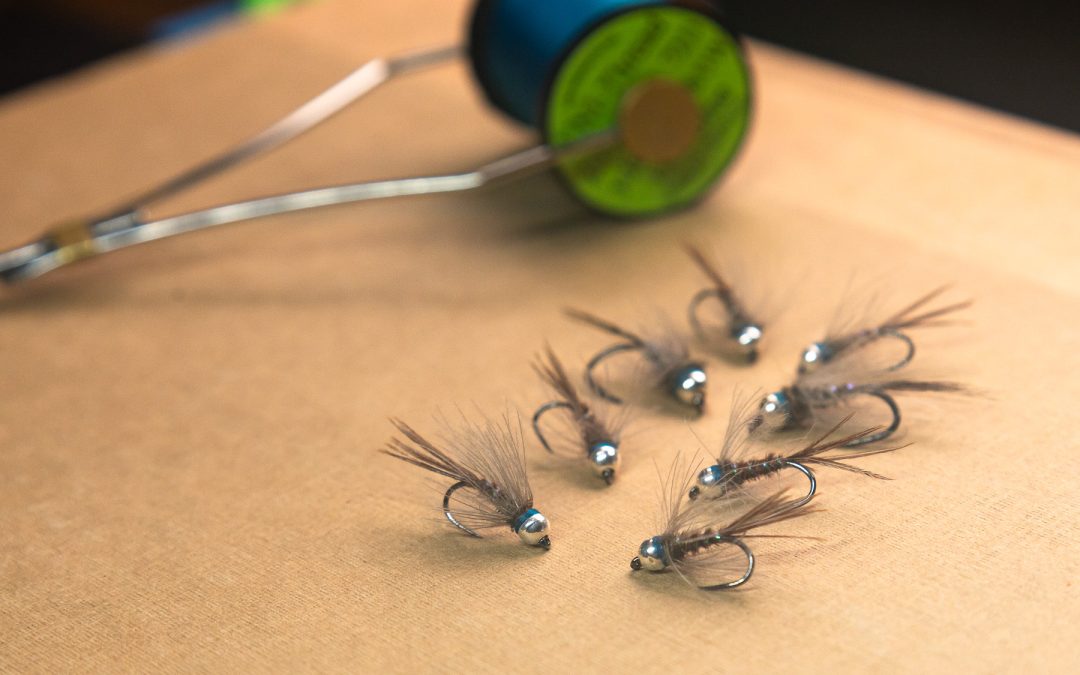
Feed ‘Em Fur

Feed ‘Em Fur

Every once in a while, the mainstay beadhead nymphs in my box see a drop in productivity. Sometimes, it takes hours or even days of denial for me to accept the message. First, I try going smaller, into the #18 and #20 range, focusing on black beads and duller finishes that have mixed, mostly subpar results. Then eventually, I flip over a leaf in my fly box, where, on the backside, I have rows of natural nymphs. They carry no bead and have minimal lead wraps on the shank for weight. These are subtle, unassuming flies, and their main attraction is an inherent motion, providing a lifelike representation of the leggy critters that trout eat.

The flies are fur nymphs. And they’re the perfect change up when trout are tired of your beadheads.

When trout are sick of seeing flashbacks, sparkly dubbing, gaudy colors or rubber legs, feed ‘em fur . . .

read more
Troutbitten Confidence Flies: Seventeen Nymphs

Troutbitten Confidence Flies: Seventeen Nymphs

All long term anglers find a set of files to believe in. We attach a confidence to these patterns that carries over from the moment we form the knot to the hook eye. We fish better with these flies. We make them work. With more focus, we refine each drift with our best patterns. But there’s also something special about a great fly to begin with . . .

The set of flies below are built and carried as a system. There is very little overlap. Each fly does a specific job or offers the trout a certain look. I could tie a Hare’s Ear in five different colors, but I don’t. Instead, I see the flies in my box as pieces of a puzzle that lock together and fill out a whole . . .

read more
Troutbitten Fly Box — The Jig Streamers

Troutbitten Fly Box — The Jig Streamers

With the jig tied in, I quickly learned that nothing rides the bottom of the river like a ball jig. It bounces, canters, pivots and tap dances around rocks and gravel like nothing else. The ball itself is the key. It allows for some very unique presentations and movements. And when you really want to hug the bottom, you can set up your rig to feel those taps, as the jig glides and scratches along the river bed.

That’s not to suggest that I constantly present a jig deep down and glued to the rocks. Not at all. But when I do want to touch the bottom, to feel the rocks, hold a position or reach into the depths with precision, a jig is the perfect vehicle. That is the key. That’s the special sauce of the jig . . .

read more

Pin It on Pinterest