


At what point is the river so low that it’s unethical to fish for trout?
“Unethical” is a strong judgment, but there are clear, unethical acts in fly fishing: fishing for spawning trout, purposely snagging fish or handling trout poorly, just to get a picture. However, there’s a lot of nuance to fishing for trout in low water.
If we’re harming the resource, then “unethical” might be a fair choice of words. Then again, pulling trout around by the lip with a hook and line doesn’t do the fish any favors. So ethics in fishing is an inherently slippery slope.
READ: Troutbitten | Are We Taking the Safety of Trout Too Far?
PODCAST: Troutbitten | Strategies for Fishing Low and Clear Water
“Drought conditions. Pretty low. Lowest I’ve ever seen.” None of these expressions means much, and there’s a wide set of situations where casting a line into skinny water hurts nothing but an angler’s pride. Let’s get to that . . .
Low water trout fishing can be extremely difficult. An already wary wild trout is on high alert in the thinnest flows. It’ll still take a fly, but the angler doesn’t get many chances before the trout is spooked, and scared trout do not eat. Low, clear water presents some of the toughest conditions for catching trout, so most anglers shy away from the challenge. And they may walk away from the opportunity, labeling it as unethical — more for an excuse than true reality.

If low water is also too warm, don’t fish, because high water temps are unsafe for catch and release.
And when pods of low-water trout congregate in isolated areas of deep water, they’re probably seeking refuge in the only place available — basically in survival mode. Don’t fish for these trout either.
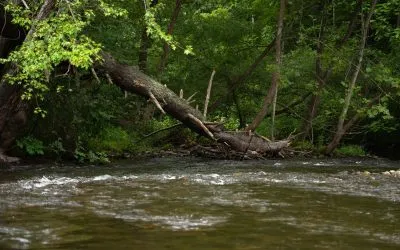
However, the majority of low water conditions are fine for trout fishing. Trout in skinny flows tend to spread out just fine, but they hold tighter to rocks, closer to the banks or along the shady crevices of wet timber. Essentially, low water trout are living the same life as they might during average flows, just in narrower windows. And they’re certainly more on guard.
Average catch rates are often way down in the lowest water, because trout sense danger easier, and they hunker down or run for cover at the slightest sign of a threat.
So what’s more unethical, catching ten trout in an hour under high water conditions because the fish are more active, or catching just one trout under tough, low water conditions? Which one does more harm to the resource?
It’s something to think about.
Fish hard, friends.
** Donate ** If you enjoy this article, please consider a donation. Your support is what keeps this Troutbitten project funded. Scroll below to find the Donate Button. And thank you.
** Subscribe to Troutbitten and follow along. (It’s free.) **
Enjoy the day.
Domenick Swentosky
T R O U T B I T T E N
domenick@troutbitten.com







Who decides? I think it’s up to the angler to analyze and determine. That determination should be done at the river. Not from the keyboard.
Our waters are low now. The trout are spread out, the bigger browns are in the same depth of skinny water I find them in heavier flows, but now theres much more skinny water.
I think low water and night fishing could be done unethically. Its much easier to spot them in a headlamp in skinny water.
Good thoughts. I like what you said about trout in skinny water, now there’s more of it.
At night, I’m never spotting trout to fish for them anyway. Honestly, I find spotting trout with a flashlight to be unethical. But that’s my own opinion, and like you said, it’s really for every one to decide.
Dom
You’re killing it! I listen to your podcasts out here in Montana and while your rivers aren’t ours the principles are the same. At 64, fishing since I was a small boy, I still learn about this wonderful outdoor sport everyday I go out and every time I listen to solid representatives of the sport.
Men like you are carrying on the humble sincere approach that we lost when John Gierach passed.
Sincere thanks to you and your partners!
Daniel A. Siri
Very kind. Thanks for your support.
Dom
Glad you wrote this.
I can’t bring myself to go after my beloved trout when they are just trying to survive. Be it too warm or too low.
No real sport in that for me.
There is only one planet and as an older guy want to leave resources for the next generation. And the blue herons.
Too warm, no doubt that a problem. If trout are just in survival mode? Same thing. But in lots of places with low water, the trout are more than fine — it’s just much harder to catch them. So there’s plenty of sport, because the trout have a big advantage. Seriously, maybe fishing for trout in high water is less sporting, because they can’t see or sense your presence as easily. Again, something to think about.
Dom
I dont see any problem as long as your not trying to floss them….the herons are being unethical lol