Gear Tip – Silica Gel

by | Mar 16, 2015 | 0 comments

The majority of the nymphs in my box have beads, and the oxidation of those beads used to be a problem. Over time, some of the shiny flies that left my vise would lose a little of their luster or start to discolor. For a while I thought perhaps it was the quality of the beads’ finish, but I eventually realized that it was more often the result of moisture. Even flies kept in a waterproof box are exposed to moisture every time the lid is opened, and oxidation can easily occur in a slightly humid box.

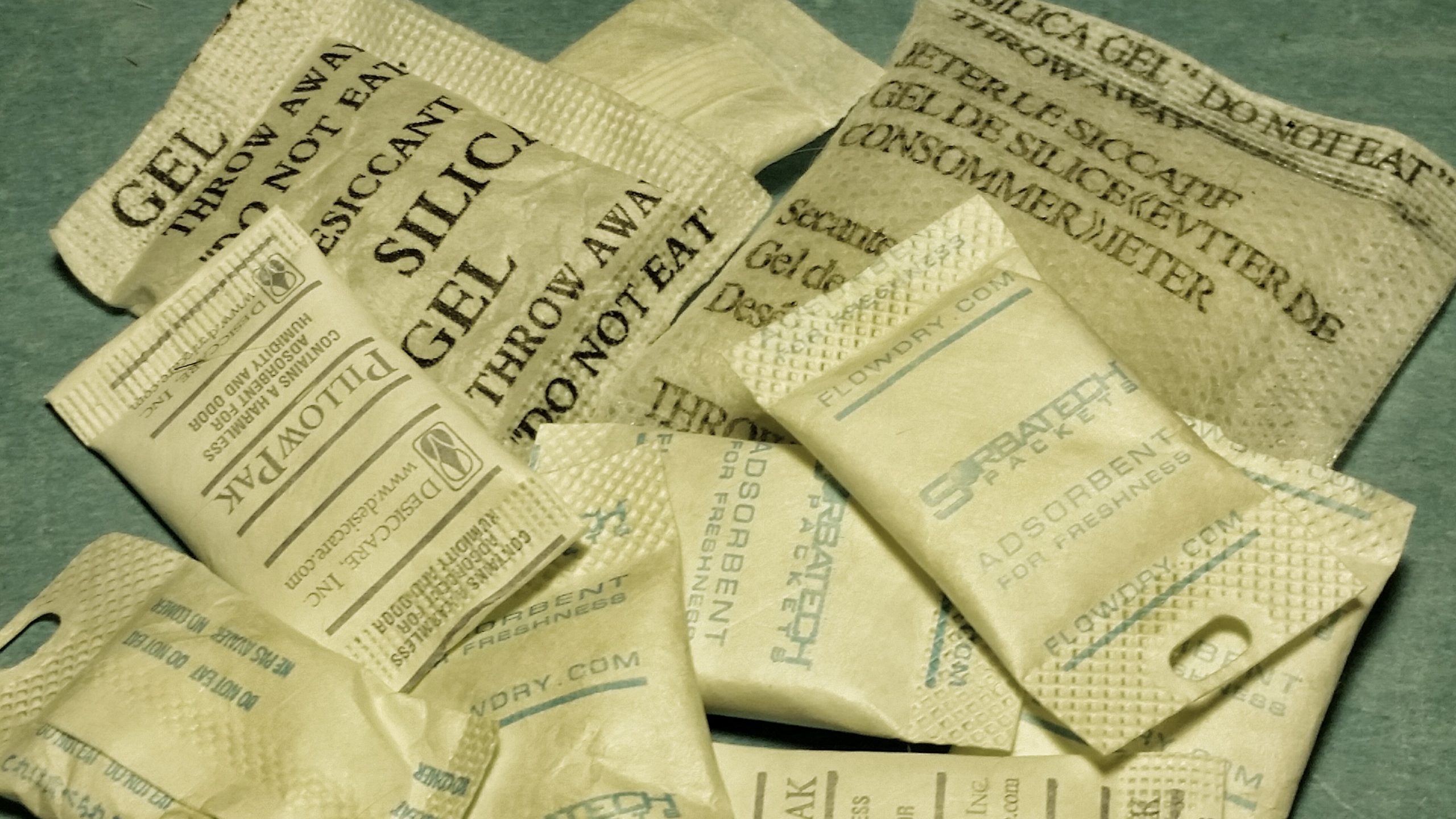
So … in my waterproof fly boxes I started tossing in a couple silica gel packets. It works.

Overwhelmed with disappointment all of my life that I could NOT EAT the tempting silica gel packets, I have made my peace by perpetuating their usefulness.

Couple points: the packets don’t stay dry forever (not so perpetual), and they need to be replaced. When I find the magical packets, I save them in a sealed pill bottle, preserving their super-powers of absorption.  I change out the ones in my fly boxes every once in a while — when I figure they’ve absorbed what they can and have lost their effectiveness — it’s just a guess.

Enjoy the day.
Domenick Swentosky
domenick@troutbitten.com

Share This Article . . .

Since 2014 and 1500+ articles deep
Troutbitten is a free resource for all anglers.
Your support is greatly appreciated.

– Explore These Post Tags –

Domenick Swentosky

Central Pennsylvania

Hi. I’m a father of two young boys, a husband, author, fly fishing guide and a musician. I fish for wild brown trout in the cool limestone waters of Central Pennsylvania year round. This is my home, and I love it. Friends. Family. And the river.

More from this Category

Lane, Depth and Speed – What Matters Most In a Nymph Drift (VIDEO)

Lane, Depth and Speed – What Matters Most In a Nymph Drift (VIDEO)

When a nymph disappears under the surface, it’s easy to settle for a drift that’s merely good enough . . . but we shouldn’t. Underwater currents are complex, and a convincing nymph drift depends on three things: lane, depth and speed. No matter the rig — tight line or indicator, Mono Rig or fly line — we must understand what the nymph is doing and make deliberate choices about its path. And while all three elements matter, trout are more particular about some drift qualities than others. In this video, I break down each element and rank them by importance, with one goal in mind: better dead drifts and more consistent fishing.

Nine Myths About Fly Choice (VIDEO)

Nine Myths About Fly Choice (VIDEO)

Most anglers put a lot of focus on fly choice. And that makes sense, because we have to tie something to the end of the line, and we have to feed something to the trout. The fly is the quickest thing to change, and it’s the easiest thing to blame. Consequently, a lot of myths have grown around fly choice. Here are nine of those myths.

Building the Troutbitten Mono Rig – Reels, Lines, Materials, Connections and Knots (VIDEO)

Building the Troutbitten Mono Rig – Reels, Lines, Materials, Connections and Knots (VIDEO)

For over a decade, I’ve written and talked about fishing a Mono Rig for all underwater presentations — nymphs with and without an indicator, with and without split shot, dry dropper, streamers of all shapes and sizes and even pure dry flies.

I’ve detailed the formulas for my favorite leaders in many places, but I’ve never put everything together from the ground up. This video answers the most frequent questions about reels, fly lines, leader connections, materials and knots. No matter what tight line leader you choose to build, the principles shown here apply.

Fishing With Visible Flies — Learning From What You Can See (VIDEO)

Fishing With Visible Flies — Learning From What You Can See (VIDEO)

Seeing the fly is one of the most enjoyable aspects of fishing. But there’s a world of education inherent, too. Watch the fly dance and fall as it mixes with the currents. Notice how it responds to rod tip animation and line strips. Then see a trout materialize around the fly and judge its reaction. Visible flies are teachers. Whether dries, wets, nymphs or streamers, watching the fly helps us refine the techniques that catch fish.

What do you think?

Be part of the Troutbitten community of ideas.
Be helpful. And be nice.

0 Comments

Submit a Comment

Your email address will not be published. Required fields are marked *

Recent Articles

Recent Posts

Domenick Swentosky

Central Pennsylvania

Hi. I’m a father of two young boys, a husband, author, fly fishing guide and a musician. I fish for wild brown trout in the cool limestone waters of Central Pennsylvania year round. This is my home, and I love it. Friends. Family. And the river.

Pin It on Pinterest



