Articles in the Category Tips

Fishing Report — Nymphs and Streamers in Rhythm

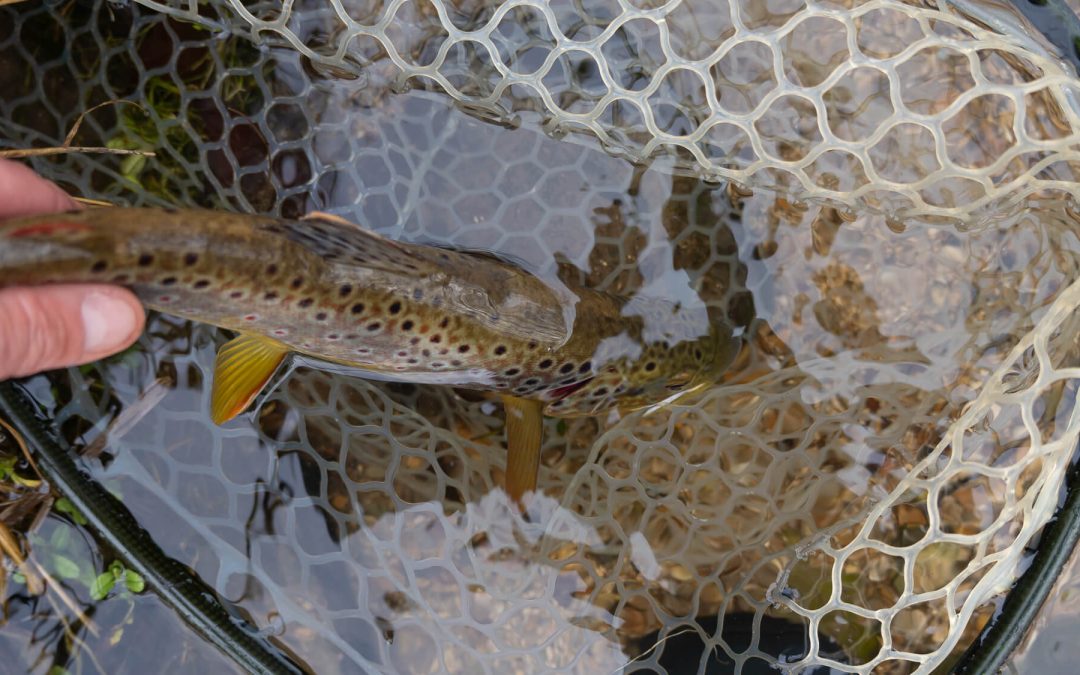
Nymphs and streamers, dead drifts and animation. I settled into a rhythm and covered water, without thinking too much, just enjoying the best winter fishing day of the year.

By that, I mean that things seemed normal, for a change. The weather was cold and windy, creating ice at the edges of the river. The river had its characteristic limestone-green in the deeper parts. And the fish responded well enough to keep things interesting. It was good, hard winter fishing.

Fishing Report — Yarn Wins the Day

Small nymphs, light split shot and a yarn indy won the day. Some dedicated streamer work got little attention. Trout were mostly shallow.

Fishing Report — Change Until You Find It

Nymphing may have technically caught just as many trout, but the process was tedious. Streamers were a better choice, but only because I could cover water and be extremely accurate with the presentations. I placed the fly very close to the structure, over and over, as I worked upstream. Without that accuracy, I think the streamer fishing would have failed.

. . . I’m tired of the low water fishing, but I continue to learn things every day. And that’s good fishing.
Fishing Low Water — Is it Unethical?

“Drought conditions. Pretty low. Lowest I’ve ever seen.” None of these expressions means much, and there’s a wide set of situations where casting a line into skinny water hurts nothing but an angler’s pride. Let’s get to that . . .

Fishing Report — Change Until You Find It

Fishing Report — Change Until You Find It

Nymphing may have technically caught just as many trout, but the process was tedious. Streamers were a better choice, but only because I could cover water and be extremely accurate with the presentations. I placed the fly very close to the structure, over and over, as I worked upstream. Without that accuracy, I think the streamer fishing would have failed.

. . . I’m tired of the low water fishing, but I continue to learn things every day. And that’s good fishing.

Fish the Edges?

Fish the Edges?

More water means more food and more opportunity for a trout to use the whole river, from bank to bank, for feeding in the drift and for ambushing bigger food forms.

. . . So, fish the edges when big flows are recent. Fish the edges too when water clarity is at its worst, because slow seams near the bank often have the best chance to clear up, as sediment falls out of the current.

. . . However, given high water with decent clarity, I do not fish the edges any more than normal. And during the last few months here, I’ve caught more trout in the main flow than in the bank water.

Fishing Marginal Water — Thoughts and Strategies

Fishing Marginal Water — Thoughts and Strategies

There’s nobody around for miles, you have every braid and river bend all to yourself, and there’s a real possibility of the biggest fish of your life to the net. The prospects of marginal water are tantalizing. But you have to be willing to cover miles of river, wade the rough stuff and accept a slim fish count, all for the low percentage chance of a couple trout where they aren’t supposed to be. You have to fish hard.

. . . Success on marginal water takes some time and patience to get it right.

VIDEO: Fishy Water — Summer to Fall

VIDEO: Fishy Water — Summer to Fall

Find feeding fish. Find the fishy water. These are the keys to putting trout in the net. But as the seasons change, so do the habits of trout. This film focuses on the shift between summer to fall.

Consistency on the water, day to day, requires an awareness of the shifts that take place, season to season.

Meeting trout in these times of transition takes some forethought and willingness to adapt . . .

read more
How Big of an Ask?

How Big of an Ask?

Are trout opportunistic feeders? Sure, but it depends on the opportunity. We choose the fly and decide how to present it. We then pick what water will receive the cast. And to inform those decisions, it’s critical to understand what we’re asking the trout to do.

How big of an ask is it?

And how opportunistic do we expect the trout to be?

Here are a few examples . . .

read more
What Hand Should Turn the Fly Reel?

What Hand Should Turn the Fly Reel?

In the short term, reeling with the casting hand might lose fish. But in the long term, it encourages poor line maintenance principles.

In this article I give a lot of thought to the various inefficiencies and handicaps that hurt when reeling with the casting hand . . .

read more
Simplicity and Fishing

Simplicity and Fishing

. . .The fact is, keeping it simple only works when trout agree to your narrow terms.

. . . All those adjustments sounds complicated, right? What happened to simple? Well, it didn’t work so well. And it might actually be simpler (or at least more efficient) to make a few leader adjustments than to fight with dragging dry flies and short drifts all afternoon.

read more

Pin It on Pinterest