Articles With the Tag . . . nymphing tips

The Bait and Switch Method — Concept and Rigging

We’re told that selective trout eat smaller flies. And I’m convinced that the most pressured trout prefer more natural patterns too. But how can our small non-descript nymph, with no adornments or flashy attractions, possibly stand out enough to convince a trout? How can we make a simple, small fly stand out? Put bait in front of it . . .

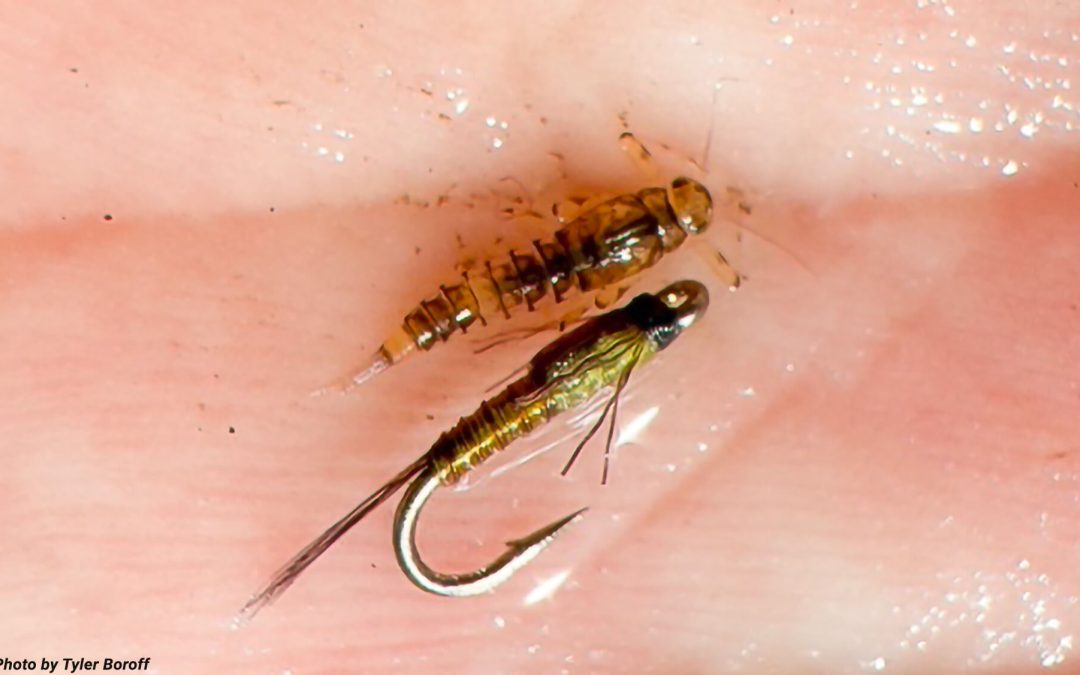
Matching the Hatch with Nymphs?

Keep it simple, and don’t make too many assumptions about what’s available down below. The bug most visible and available in the air might not be what takes the trout’s attention underneath.

Confidence Flies: Signals and Changes

Some anglers lend too much credence to the hatch charts for nymph selection. A nymphing angler must be careful not to take every dry fly concept and principle underneath.

Never forget, what you see on the surface or in the air does not necessarily correlate with the best fly choice under the water. Tan Caddis may be all over the water’s surface, but are they easily available as a nymph to the trout right now? We can’t know that for certain, but we can test the theory . . .

The Best Fly Rods for the Mono Rig, Tight Line and Euro Nymphing — My Favorite Rods

Choosing a fly rod that’s perfect for the Mono Rig or euro nymphing starts with knowing your goals. How versatile do you want to be?

From the best all-around fly rod that’s ready to handle nymphs, streamers and more on a long leader, to specialized euro nymphing rods and dedicated streamer rods, here are my favorite tools for fishing the Mono Rig . . .

Matching the Hatch with Nymphs?

Matching the Hatch with Nymphs?

Good anglers are observant students of all conditions. A flowing, wild river changes constantly, from water flows to water temperatures, from high sun to the next patch of dark clouds on the horizon. Resident trout respond to changes in their environment, and we’d do...
Confidence Flies: Signals and Changes

Confidence Flies: Signals and Changes

** NOTE ** This article is an excerpt from the upcoming Troutbitten book, Fly Fishing the Mono Rig. This is part of the chapter, Finding Your Confidence Flies. Finding your confidence flies comes from catching trout, from testing a theory, tying on a fly and having a...

PODCAST: Critical Nymphing Concepts #5 — Weight: The Fundamental Factor — S10, Ep5

PODCAST: Critical Nymphing Concepts #5 — Weight: The Fundamental Factor — S10, Ep5

Once you leave the water’s surface, weight is necessary for the presentation. Here’s what weights to choose, for nymphing, why and when. You can’t avoid it. Weight is the fundamental factor. Meaning, it’s probably more important than the fly itself. More weight or less is more consequential than what dubbing, feather or ribbing is wound around the hook shank.

We use all types of weight, and there are good reasons for all of these: tungsten beads, split shot and drop shot . . .

read more
Nymphing: Three Ways to Dead Drift — Bottom Bounce, Strike Zone, Tracking

Nymphing: Three Ways to Dead Drift — Bottom Bounce, Strike Zone, Tracking

A dead drift is the most common goal for a nymph, but there are three distinct ways to achieve it: bottom bouncing, strike zone rides and tracking the flies.

Each of these tactics simulates something that a trout sees every day. And each can fairly be described as a dead drift. But often, just one of these presentations is the most agreeable approach to the trout. All of them can look like a natural dead drift . . .

read more

Pin It on Pinterest