Fishing is a story . . . On a spring morning, I took advantage of some good nymphing action to test a Micro Mono Rig against the Standard. Varying conditions provided different challenges, but the good action remained until the end.


Fishing is a story . . . On a spring morning, I took advantage of some good nymphing action to test a Micro Mono Rig against the Standard. Varying conditions provided different challenges, but the good action remained until the end.

Dry dropper is great. Just put a nymph under that dry fly and get the best of both worlds. Right? Not so fast . . . The idea that you can have your cake and eat it too — that you’ll get perfect drifts on the dry fly and the nymph — and that you somehow double your chances by dropping a nymph under the dry is not true. This is the big lie of dry dropper fishing.
Here’s the problem: In most cases, neither fly ends up with a great drift. Instead, both flies are compromised and their natural drift is altered.
Understanding the fly’s position — where it is and where it’s going — is the key challenge in fly fishing. And aside from basic casting skills, an awareness of the fly in the current is the most essential skill.
At what angle should we set the sighter? Should it be vertical? Should it be at a 45? Should it be flatter? And should it stay the same throughout the drift or should it change? While tight line or euro nymphing, you can get excellent dead drifts with any sighter angle if you’re attentive to the details and understand the strengths of all angles. There is no better leading angle. It’s a choice based on preference, skill, objectives and river conditions.
Never forget that it’s all about contact — not all the time, and not so much that you’re moving the nymphs. Perfect tracking is just barely out of contact. And throwing a pile of slack into the water only works when you get lucky.

We’re told that selective trout eat smaller flies. And I’m convinced that the most pressured trout prefer more natural patterns too. But how can our small non-descript nymph, with no adornments or flashy attractions, possibly stand out enough to convince a trout? How can we make a simple, small fly stand out? Put bait in front of it . . .

The Troutbitten Shop Early Winter Sale ’25 is here, with all leaders, hats, stickers and apparel back in stock.

It was a pleasure to once again be a guest with Tom Rosenbauer on the Orvis Fly Fishing Podcast. This time, Tom and I talked about split shot.
Fishing is a story . . . During some of the lowest water I’ve seen in our area, I chose to nymph the skinny stuff on a tight line. But instead of fishing fine and far off, I started with a drop shot of medium weight. Later, I mixed in a tracking approach with a single, light nymph. A couple hours in, I streamer fished a long flat, to test the trout’s response. And I finished the morning with some nice trout that responded to nymphs in the strike zone . . .
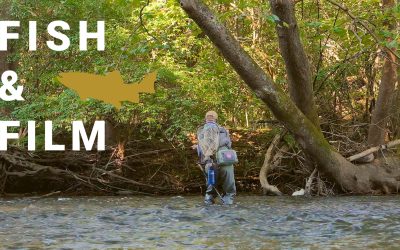
Fishing is a story . . . I’ve fished all of my favorite rivers from their mouths to their headwaters. And within those mile of opportunity, my favored spots keep calling me back. I fish these places for a hard reset, for a return to home base — for getting back to the familiar by seeing what has changed.
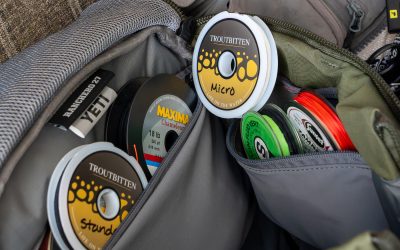
You can fish tight line to the indicator style with a Micro Mono Rig instead of a Standard, but here’s what you’ll be giving up. Here’s what you’re losing . . .
. . . It all starts with a good understanding of the Mono Rig as a HYBRID system. The Standard Mono Rig casts and mends like a fly line, so we use the most unique advantage of fly fishing, introducing slack in the best places . . .