Search Month: January 2021

Fighting Big Fish — Keep ‘Em Down

A top-tier river trout is a beast. The inherent nature of a river, with the endless obstacles, rocks, tree parts, current breaks, high gradient runs and undercut banks challenges the angler at every bend. So when you finally hook up with a Whiskey, a new game begins. It’s a match up between trout and fisherman. Who will win that fight?

Bringing a trout to the net requires a series of accurate calculations, thoughtful moves and a good dose of luck. But with a few guiding principles and a bit of experience, you can minimize the luck required and get a good handle on the outcome. One of the best of those principles, is to keep ’em down . . .

Test Without Bias

Of all the reasons why I fly fish for trout, two captivating things keep me coming back: refining a system, and breaking it all apart.

Go into any new exploration with a clear head and without expectations. Remove your prejudices and forget your preferences. Achieve this, and you may well be surprised by what you find with a fly rod in your hand. Ignore this, or fail in the attempt, and you’ll likely learn nothing. Worse yet, you may learn the wrong thing.

Let the river teach. Let time be the gauge. Let the fish have their say. Forgo conclusions and look instead for certainty in trends. Test honestly and without bias — always . . .

Trout Like To Do What Their Friends Are Doing

If you fish hard and pay attention to the details, you’ll often catch, miss or turn enough trout to learn something. At the heart of the puzzle is an eternal question: What do the trout want?

The best days start by learning what most trout in the river are doing. So, gather data toward those questions, and then branch off from there.

The Inefficiency of Inexperience

The way you move on the water, the way you carry gear and how you adapt, has a big impact on your experience out there. Yes, we all enjoy the scenery and solitude. We love the sites and sounds of a river. But when that novelty dulls a bit, the process of solving problems and seeing the results of our solutions is what keeps us in the game for a lifetime . . .

Trout Like To Do What Their Friends Are Doing

Trout Like To Do What Their Friends Are Doing

If you fish hard and pay attention to the details, you’ll often catch, miss or turn enough trout to learn something. At the heart of the puzzle is an eternal question: What do the trout want?

The best days start by learning what most trout in the river are doing. So, gather data toward those questions, and then branch off from there.

The Inefficiency of Inexperience

The Inefficiency of Inexperience

The way you move on the water, the way you carry gear and how you adapt, has a big impact on your experience out there. Yes, we all enjoy the scenery and solitude. We love the sites and sounds of a river. But when that novelty dulls a bit, the process of solving problems and seeing the results of our solutions is what keeps us in the game for a lifetime . . .

100 Day Gear Review: Simms G3 Guide Vest

100 Day Gear Review: Simms G3 Guide Vest

When a big part of your life is fishing, how you carry fishing gear is a big deal. The Simms G3 Guide Vest starts with a classic design and modernizes it in all the best ways.

With a stacked layout, molded pockets, bulletproof materials, dual front closure, a unique collar and massive rear storage, the G3 is built for fly fishers.

The G3 is the versatile angler’s perfect, efficient carry-and-access system . . .

Tight Lining — Not All That Tight

Tight Lining — Not All That Tight

There are times for constant contact. But on most days, the best tight line presentations are not about feeling the action of the fly or the weight on the bottom. It’s not about a perfect tight line with the rig. Rather, it’s about slipping in and out of contact with the fly on a small scale — staying somewhere between tightline and slackline — that’s where the magic lies.

Winter Welcome Home

Winter Welcome Home

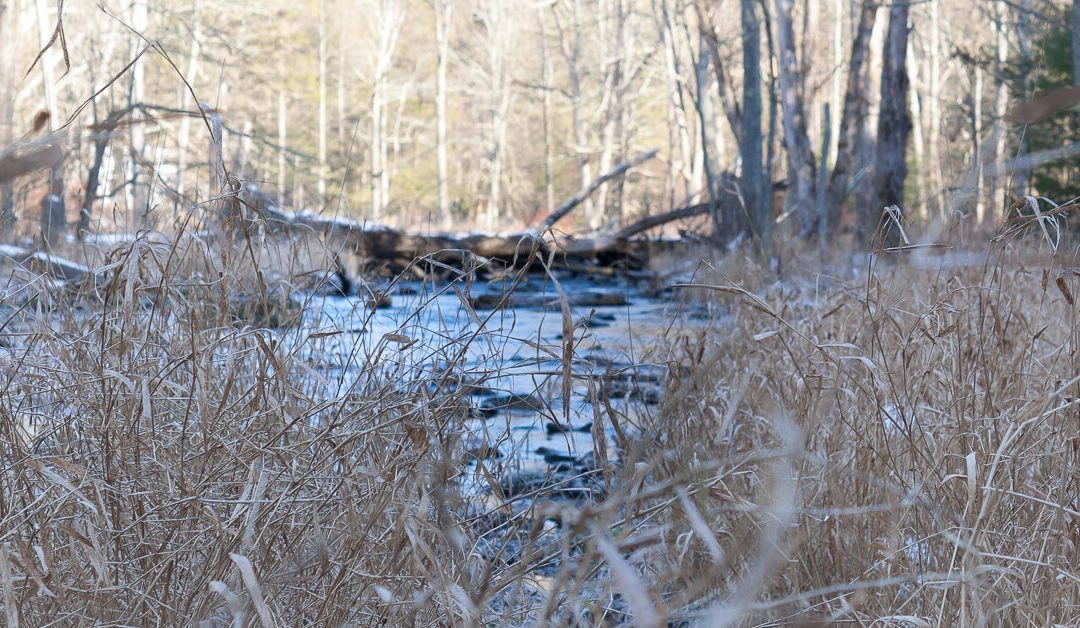
Winter is a quiet ghost.

When he days are dark and at their coldest, the woods are barren — void of life, save for the chickadees and a few eager squirrels. Most of the mammals hunker down in burrows, inside hollowed out trees and underneath hemlock bows. You might miss all this if you don’t slow down, find a log and just sit for a while to listen to the silence. It’s different.

The forest is a widow in the winter wind.

Euro Nymphing Fly Line vs The Mono Rig

Euro Nymphing Fly Line vs The Mono Rig

I’ve received countless questions about my thoughts regarding euro lines and mono rigs. And while this is also one of the most common questions I’ve fielded through the years, it has a complex answer that I’ve never tackled in an article. So let’s fix that.

Here are my thoughts on euro nymphing lines vs a Mono Rig. These views address all seasons, all distances and many variations . . .

read more
Six Ways To Get Your Fly Deeper

Six Ways To Get Your Fly Deeper

In time, all things in a river sink to the bottom. How much time do you have?

Here are the six elements: weight, depth adjustment, material resistance, drift length, tuck cast, current seams.

Each one of these elements works with the others to get deeper and to get there more naturally. It’s not enough to add some weight, just like it’s not enough to switch from 3X to 4X, or to slide the indy up the line or drop the sighter. All of it matters. And everything interacts with the other things beside it.

read more

Pin It on Pinterest