

VIDEOS
Fish Hard
I published the first Troutbitten video in the spring of 2017, in an effort to show the things that cannot be written or photographed.
Years later, I brought Josh Darling, owner of Wilds Media, into the project. His art, his eye and his film expertise make Josh the perfect partner for this work.
In 2022, Josh and I began the Troutbitten Tips series on the Troutbitten YouTube channel. These are short, helpful and unique tips for a life on the water.
We’ve also added a series called, Fly Fishing the Mono Rig. This ongoing collection of videos highlights the versatility and the nuances of this hybrid fly fishing system.
A dedicated Gear Review series just launched on the channel, and who knows what’s next.
Troutbitten videos teach tactics and share stories that keep the river in our minds and in our hearts.

From the video, The River Doesn’t Owe You Anything. (Fall, 2020) Photo by Josh Darling


WHERE TO WATCH
All Troutbitten videos are found on the Troutbitten YouTube channel.
Explore the playlists. Subscribe to the channel, and Leave a comment.
Every Troutbitten Video also has a companion article, with more information and an embedded video link.
Thanks for watching.
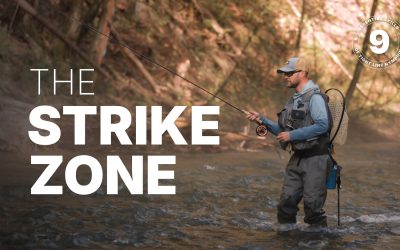
VIDEO: Locating the Strike Zone: #6 of The Nine Essential Skills for Tight Line Nymphing
The strike zone is a cushion of water near the bottom, and it’s where all good things happen in a river. The concept of locating the strike zone is absolutely game changing for a nymphing game.

Fish and Film – Tight Line Tracking, Nymphs In the Wind, Dry Dropper and Wild Trout (VIDEO)
On the best trout rivers, everything changes when the bugs start moving. On an early spring morning on a favorite river, I found good action for trout with nymphs and a tracking approach.

VIDEO: Finding Contact and Reading the Sighter: #5 of The Nine Essential Skills for Tight Line Nymphing
When we learn to find contact and read the sighter, we’re no longer guessing about where the flies are. We know where they are, and we control where they’ll go next.
With a tight line rig, we’re no longer hoping something will happen. We’re making it happen. And that knowledge really l begins with finding contact and reading the sighter.

RIVERSIDE: The Best Fly Rods for the Mono Rig
What’s your favorite fly rod? This most frequently asked question now has its answer in the Troutbitten Riverside Video Series, where I discuss all the qualities to look for in a rod well suited for the Mono Rig: accuracy, power, length, recovery and more.
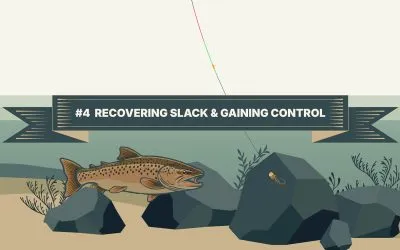
VIDEO: Recovering Slack and Gaining Control: #4 of The Nine Essential Skills for Tight Line Nymphing
Many of these nine essential skills happen within the first couple seconds of the presentation — often less. And immediately after we stick the landing on the sighter (putting it in the perfect angle and height) we must begin recovering slack, to gain control of the system and keep it.
In this video, we highlight three different ways to recover slack and talk about why combining all of them is so important.
VIDEO: Sticking the Landing: #3 of The Nine Essential Skills for Tight Line Nymphing
Sticking the landing is about putting the sighter in the perfect position for a great drift. The fly hits, tippet enters, and the sighter sets up in the air at an angle. Sticking the landing puts us in immediate control and it enhances strike detection.
Tight line drifts are short, so the entry of the fly must be efficient. Line on the water takes away our control, so everything drags. But sticking the landing maximizes our control from the beginning and sets up an efficient and effective drift of the nymph.
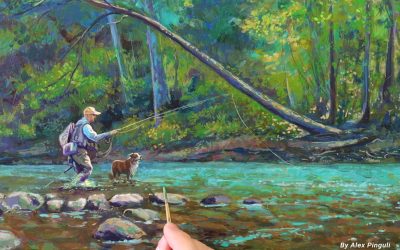
Troutbitten In Acrylic
I love the parallels of process that Alex brings up, comparing painting with fishing. And it reminded me that my years as a musician brought to light the same challenges and rewards that we all love when we’re on the water . . .
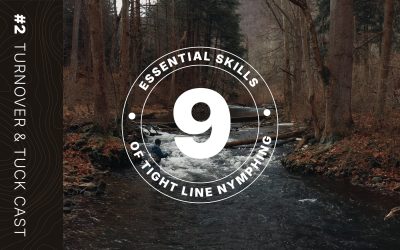
VIDEO: Turnover and the Tuck Cast: #2 of The Nine Essential Skills for Tight Line Nymphing
The tuck cast is at the heart of a good tight line nymphing presentation. It’s the result of good turnover in the air. It’s a simple fly-first entry. The tucks cast is not a specialized cast; it’s a one-hundred percent cast. Every time, all the time, this is how we cast a Mono Rig. No lobbing. Real casting, with control and accuracy that sets up a great drift.

Q&A: When Do You Change the Streamer? (with VIDEO)
Everyone has their own method. And as long as you have a plan and a reason to change, then it’s probably just as good as mine. But I have a lot more to change about how I present the streamer before I actually clip off and change the fly . . .

VIDEO: Angle and Approach: #1 of The Nine Essential Skills for Tight Line Nymphing
Success begins with how we approach the water and with the angles we choose to fish, because the tight line advantage falls apart if we’re not in the best position for great drifts.
These nine essential skills are the baseline for dead drifting nymphs with a tight line. These are the necessary fundamentals. We fish many different tactics and fly styles on a Mono Rig, tight line system, but it all starts here. These skills set the foundation for everything else that is possible.

Fish and Film – Tough Winter Fishing – Streamers, Nymphs and Versatility (VIDEO)
Winter trout fishing in rivers has its ups and downs. As with any season, conditions and fish habits change quickly, and it’s our challenge to adapt to the circumstances. On one of the toughest days of this early winter, I brought out the cameras. As promised, with this Fish and Film series, I’m here to show the highs and lows, the struggles and the victories. With about six fish to the net in a few hours, this day was a good example of how difficult conditions can still be turned into a great opportunity.
I fished with streamers and nymphs in multiple different ways . . .
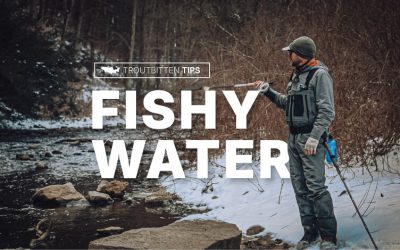
VIDEO: Fishy Water — Fall Into Winter
Find feeding fish. Find the fishy water. These are the keys to putting trout in the net. But as the seasons change, so do the habits of trout. This film focuses on the shift between summer to fall.
Consistency on the water, day to day, requires an awareness of the shifts that take place, season to season.
Meeting trout in these times of transition takes some forethought and willingness to adapt . . .