Articles in the Category Tactics

Don’t Be Afraid of the Bottom (VIDEO)

With a nymph, most trout are caught near the bottom. That’s not a surprise. Most of the good things in a river happen near the riverbed. That’s where the bugs and baitfish live. And nothing solves the problems of nymphing better than getting lower for longer.

The Hook Set and Go (VIDEO)

I use a ten-inch hook set — fast not far — at the end of every drift. And I use this for all underwater presentations. This is not just about setting the hook. Instead, this simple motion — this quick lift up and over — gets the fly activated. It releases surface tension and gets the fly moving, preparing it for the backcast.

My Streamer Approach (VIDEO)

I’d like to show you my basic steamer approach. There are a lot of animations that I give to a streamer — a lot of looks. And I use plenty of different fly patterns too. I have my favorite leader and even my favorite water types. But there are a few things that I think are more important than any of that.

So let’s get to the basics. I’ll show you some of the guiding principles for how I fish streamers. Some of this is a little different — not exactly mainstream.

Lane, Depth and Speed – What Matters Most In a Nymph Drift (VIDEO)

When a nymph disappears under the surface, it’s easy to settle for a drift that’s merely good enough . . . but we shouldn’t. Underwater currents are complex, and a convincing nymph drift depends on three things: lane, depth and speed. No matter the rig — tight line or indicator, Mono Rig or fly line — we must understand what the nymph is doing and make deliberate choices about its path. And while all three elements matter, trout are more particular about some drift qualities than others. In this video, I break down each element and rank them by importance, with one goal in mind: better dead drifts and more consistent fishing.

Nymphs On the Drop (VIDEO)

Nymphs On the Drop (VIDEO)

Sometimes, trout eat nymphs on the drop — as the fly is falling or fluttering to the bottom. And when we recognize that, it’s time to make some adjustments to our rig, the presentation and even the water we choose to fish.

This video shows how I fish for trout when their focus for nymphs is out of the strike zone and above them. I cover tracking the flies, floating the sighter, longer casts, power curves, tuck casts, slack to the nymph, strike detection and more. And I walk through all of this while fishing through a favorite section of river.

Fish and Film – Dry or Die (VIDEO)

Fish and Film – Dry or Die (VIDEO)

Every summer I fish dry flies more than anything else. This year, without really planning on it, that’s all I’ve fished. I haven’t touched a nymph or a streamer for about two months now. It’s been dry fly or die.

Summers are my off season from guiding, but life gets complicated. There’s all the branches of the Troutbitten Project to keep up with, and rest of life creeps in too. It all gets mixed together. It get’s too cluttered. And maybe simplifying my flies and tactics is a response to all that.

Fly Casting Curves (VIDEO)

Fly Casting Curves (VIDEO)

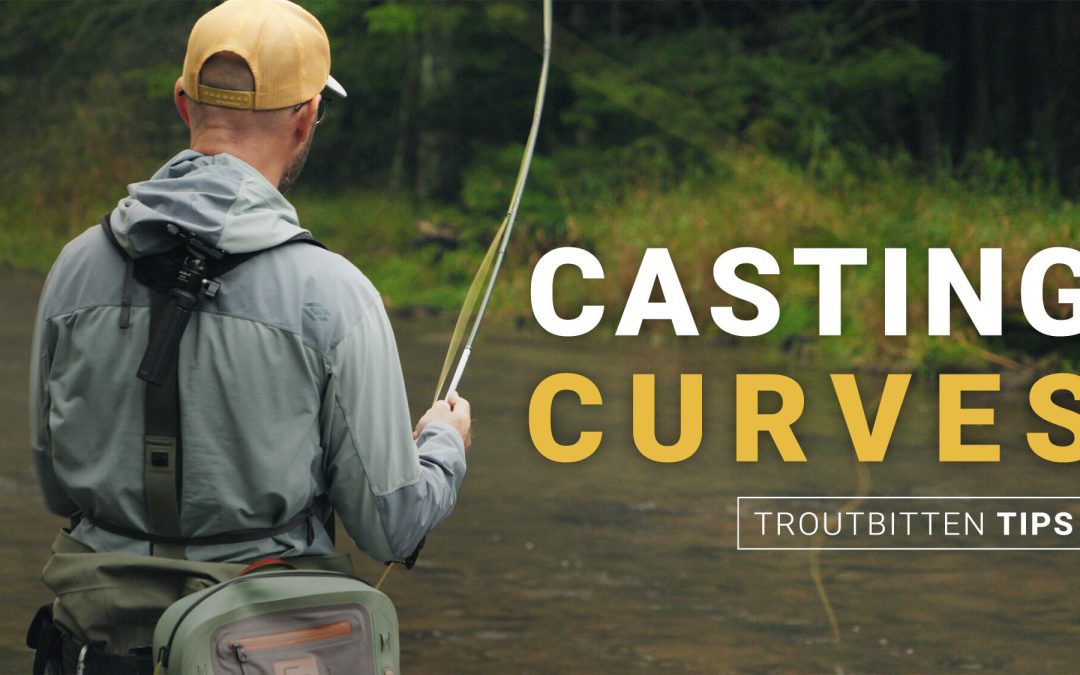
There are two types of fly casting curves: a power curve, and the one no one seems to mention, the lagging curve. Understanding both leads to a complete set of skills to match any situation with a fly rod. Mastering these concepts — and these casts — can change everything on the water for you.

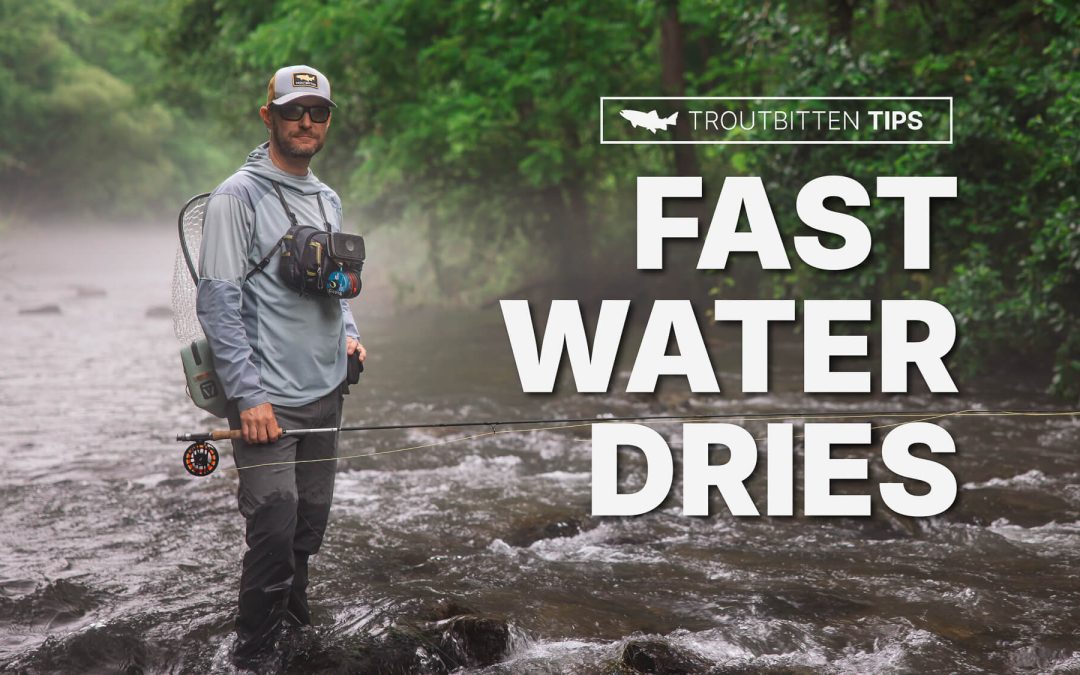
Dry Flies In Fast Water – Fly Fishing Tips (with VIDEO)

Dry Flies In Fast Water – Fly Fishing Tips (with VIDEO)

Here’s a look at fishing dry flies in faster water — in more complex currents — because there’s a unique set of skills to get true dead drifts in the fast water and pocket water. The drifts are shorter and harder to achieve. But some of the best fish hang out in faster stuff, and if you give them a great presentation you have a really good chance.

In this video, I cover three main skills that help meet the particulars of fishing dry flies in fast water. Those skills are also detailed below the video, in the article, with links to further Troutbitten resources.

Where’s My Fly?

Where’s My Fly?

Understanding the fly’s position — where it is and where it’s going — is the key challenge in fly fishing. And aside from basic casting skills, an awareness of the fly in the current is the most essential skill.

read more
Drifting Light Nymphs

Drifting Light Nymphs

Never forget that it’s all about contact — not all the time, and not so much that you’re moving the nymphs. Perfect tracking is just barely out of contact. And throwing a pile of slack into the water only works when you get lucky.

read more
The Bait and Switch Method — Concept and Rigging

The Bait and Switch Method — Concept and Rigging

We’re told that selective trout eat smaller flies. And I’m convinced that the most pressured trout prefer more natural patterns too. But how can our small non-descript nymph, with no adornments or flashy attractions, possibly stand out enough to convince a trout? How can we make a simple, small fly stand out? Put bait in front of it . . .

read more
VIDEO: A Slidable Dry Dropper System

VIDEO: A Slidable Dry Dropper System

My friend once described a truly slidable dry dropper system as the Holy Grail of fly fishing. For sure, the ability to slide the dry fly to adjust for depth opens up all the possibilities of a dry dropper system. But it has to slide quickly. It has to be easy. And the slidable system cannot take away the finesse of the dry fly.

read more

Pin It on Pinterest