Articles in the Category Streamers

Building the Troutbitten Mono Rig – Reels, Lines, Materials, Connections and Knots (VIDEO)

For over a decade, I’ve written and talked about fishing a Mono Rig for all underwater presentations — nymphs with and without an indicator, with and without split shot, dry dropper, streamers of all shapes and sizes and even pure dry flies.

I’ve detailed the formulas for my favorite leaders in many places, but I’ve never put everything together from the ground up. This video answers the most frequent questions about reels, fly lines, leader connections, materials and knots. No matter what tight line leader you choose to build, the principles shown here apply.

Fishing With Visible Flies — Learning From What You Can See (VIDEO)

Seeing the fly is one of the most enjoyable aspects of fishing. But there’s a world of education inherent, too. Watch the fly dance and fall as it mixes with the currents. Notice how it responds to rod tip animation and line strips. Then see a trout materialize around the fly and judge its reaction. Visible flies are teachers. Whether dries, wets, nymphs or streamers, watching the fly helps us refine the techniques that catch fish.

Streamer Anglers — Be Like the Drift Boat

Keep moving. That’s the key to streamer fishing. And moving downstream with the currents makes it possible for hours at a time. Wade down and fish up . . .

Fishing the Edges (VIDEO)

Here are specific strategies for targeting edge water, with footage from two trips — one on small water and one on a larger river. I fish nymphs and streamers, changing frequently to suit the conditions.

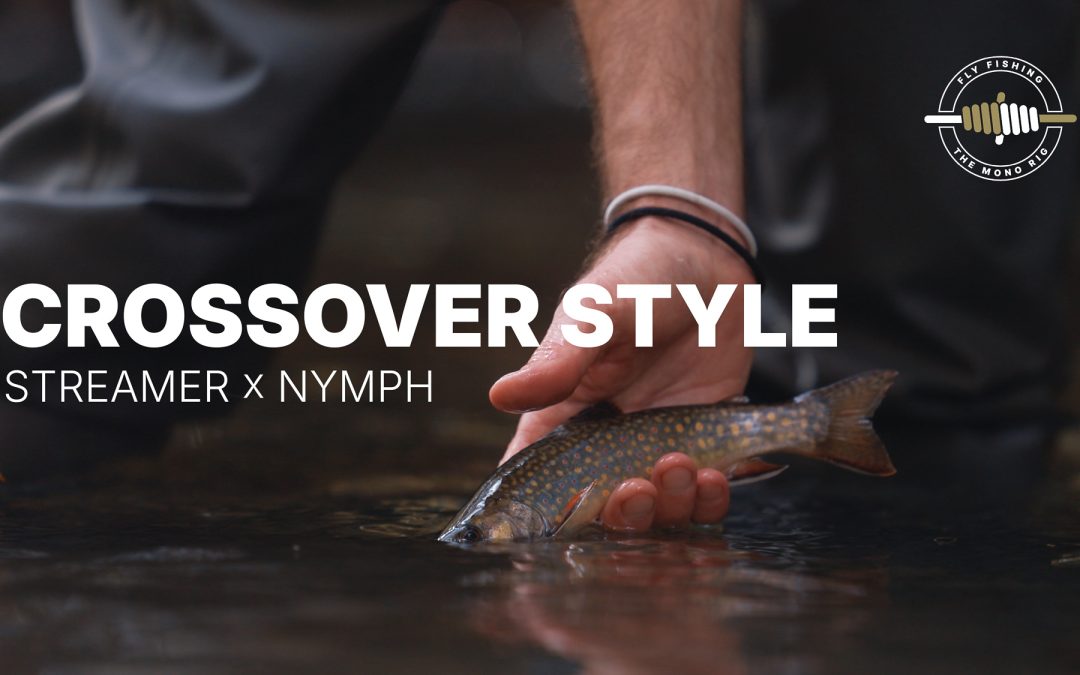
VIDEO: Crossover Style – Streamer X Nymph

VIDEO: Crossover Style – Streamer X Nymph

Crossover Technique is streamers on a tight line. It’s part streamer concept and part nymphing. There’s always a streamer on the point, and sometimes a nymph is added as a second fly.

The Crossover is all about taking a streamer to the fish. Instead of stripping our fly away from the trout, asking it to get up and chase, the Crossover style makes it easier for a lazy trout to say yes to the presentation.

Crossover techniques are subtle but attractive. We’re trying to inspire the trout to eat a bigger food form, while having precise control over exactly where the fly is and how it moves, all because we’re fishing it on a tight line, Mono Rig system.

The HV Thin Crossover Leader

The HV Thin Crossover Leader

This leader is perfectly built for subtle streamer presentations, at longer distances, with less leader sag and more feel. I’ve been working on the Crossover technique for half a decade or more. But in the last year, after the addition of the Super Pause and the slight downsizing of flies, a different leader build has made all the difference.

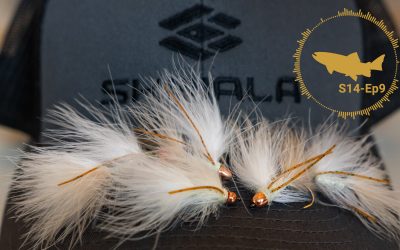
PODCAST: Streamer Presentations #9 — The Tight Line Dance (S14, Ep9)

PODCAST: Streamer Presentations #9 — The Tight Line Dance (S14, Ep9)

We use a visible streamer for the tight line dance. We watch the streamer dip and swoon around rocks, tree parts and the river bank. Wherever there’s good structure, that’s the next target. The concept of the tight line dance allows us to hold the streamer around structure for longer, animating the streamer in every way imaginable to convince the trout. 

read more
PODCAST: Streamer Presentations #7 — Speed Leads and Lane Changes (S14, Ep7)

PODCAST: Streamer Presentations #7 — Speed Leads and Lane Changes (S14, Ep7)

Speed leads happen mostly in one lane, and they go faster than their parent current. Lane changes are exactly what they sound like — the fly is traveling in one lane, and then we deliberately bring the fly over to a nearby lane and travel down that one.

The speed lead is a term coined by our friend, Josh Stewart. Way back in 2017, I published a few articles about low-riding streamer presentations, with streamers tied on lead ball jigs. I’d gotten the idea from Rich Strolis, and it was a bit of an underground thing at the time. I remember that Stewey got in touch after reading my article, and we started sharing ideas and presentation styles with some of these flies. When I described leading low but faster than the current, Josh said he called it a speed lead, and it was one of his best tactics for stirring up big trout . . .

read more

Pin It on Pinterest