Is catch and release a good idea all the time or just some of the time? In this episode, we consider the ways that the practice of catch and release changes the experience of fishing for us — how our approach shifts when the goals are different.
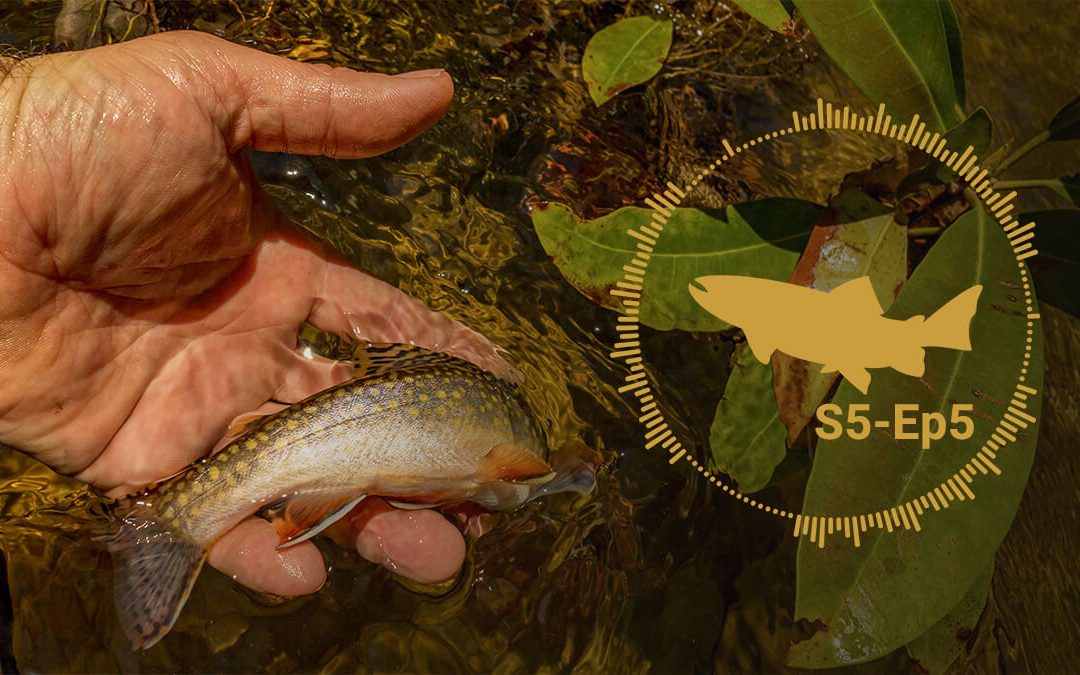


Is catch and release a good idea all the time or just some of the time? In this episode, we consider the ways that the practice of catch and release changes the experience of fishing for us — how our approach shifts when the goals are different.

Weight is weight. It’s the original sin of fly fishing, and there is nothing inherently better about any of these styles. Use all of them.

Success on the water starts with finding fish and not spooking them. No one ever caught a scared trout. All the tactics, the flies and the habits of river trout that we focus on mean nothing if the fish are on high alert and out of the mood to eat.
Don’t spook the fish. Achieving that is different from season to season. It’s different in various water types. And acceptable distances from the trout change even with the angles by which you approach them . . .

This episode of the Troutbitten Podcast is about tying flies. It’s about how that aspect of fly fishing changes everything for us. Most of us wish to be a complete angler — one who is well rounded, ready for anything and versatile.
By tying flies, we get closer to that goal, because tying flies engages us in a deeper way. We’re more connected, more invested in what we tie to the end of the line. With a few turns of monofilament through the hook eye, we are attached to our own creations and our own solutions . . .

Fall fishing offers renewed hope and opening opportunities, along with a change of scenery. As the foliage turns, so do the habits of wild trout. Our favorite fish loses some of its characteristic inhibitions.
More water, less light and the instinct to fatten up create unique opportunities for every angler who is willing to meet the trout on their own terms. While hatches may be sparse, the underwater game opens up to those with the skills to present a nymph, streamer or wet fly with precision . . .

Because the trout have different habits in the winter, we refine our approach to meet them on their own terms. Is that . . . low and slow? Sure, sometimes. Nymphing is often seen as the go-to approach, but for the winter trout angler who’s attentive, the opportunities for some great streamer action are there too. Even dry flies can be an option if you keep your eyes open.
Why do so few anglers fish in the winter? Well, honestly, because it’s a challenge that many fishermen are not ready for. What does it take to catch trout in the winter? That’s what we discuss in this podcast . . .

In this episode, I get together with my long time friend, Matt Grobe, for a candid, entertaining, fun and technical discussion about wild trout, big trout, and the differences between the fishing cultures and opportunities available in two of the meccas for trout fishing in the states — Pennsylvania and Montana.
Matt has lived and fished hard in both states, and he’s been fortunate enough to live a life on the water, not just chasing wild trout, but chasing the big ones. He’s always had a knack for turning over the next top tier fish. And in our conversation, Matt offers some great tips for targeting big trout and consistently putting them in the net.

When it’s the best tool for the job, then putting an indy on a tight line rig is a deadly variation to a contact nymphing system. I build my leader to be ready for it. The rod I carry is designed for it. Because tight line to the indicator is a problem solving approach that gets the job done when pure tight lining simply cannot . . .

Pushing through the tough times — dealing with bad weather and difficult conditions — puts you one step ahead of most anglers. The rivers and the parking lots are empty when the wind is howling, the snow is blowing or it’s pouring rain. Sure, we’d all like to fish the sweetheart days. But the more you learn to fight the elements and win — to have success on the water — the more you long for those tough conditions.
In this episode, my friends and I talk about fighting the elements. How can we effectively fish through rain, wind, cold weather, ice, snow, hard sun and everything else that nature throws at us?

The kid was ten years old and small for his age, but his legs were strong and he waded without fear. He fished hard. We shared a passion and a singular focus, so I enjoyed having him on the water. He stood just tall enough not to lose him in a field of goldenrod, and he weighed less than the family dog. But like the shepherd, he was sturdy, tough and determined, with unwavering perseverance keeping him focused during the inevitable slow days with a fly rod. . . . He only talked of fishing.

Make that fly swim. Give life to the streamer. Convince the trout that they’re looking at a living, swimming creature.
That’s what this podcast conversation is about. How do we move the fly with the line hand and the rod tip, with strips, jigs, twitches and more? We talk about head position, depth, speed and holding vs crossing currents and seams. We touch on natural looks vs attractive ones. Should we make it easy for them or make them chase?