Here’s a good talk about other styles and other species, and how using a spinning rod or baitcaster can open up your fishing world to a more complete set of skills and a better understanding of . . . fishing.
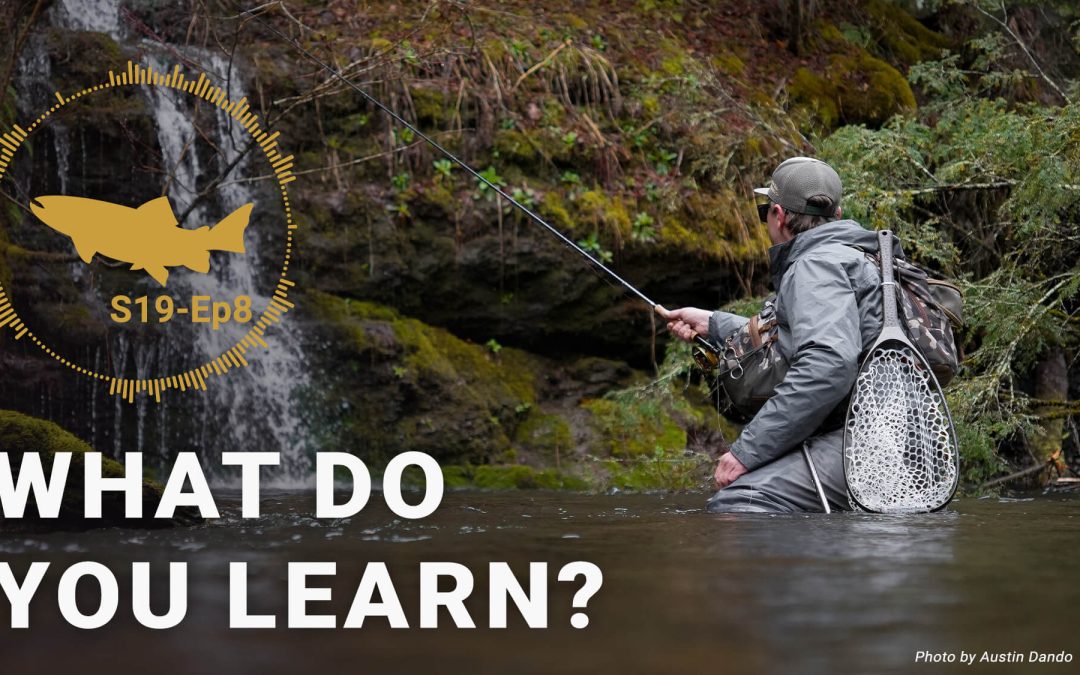


Here’s a good talk about other styles and other species, and how using a spinning rod or baitcaster can open up your fishing world to a more complete set of skills and a better understanding of . . . fishing.

Over the last few decades, fishing apparel has undergone a dramatic evolution. Today, we expect more than ever from our boots, waders, jackets, and shirts because we’ve grown accustomed to the advantages of purpose-built gear that’s ready to deliver.
Comfort, support and durability are the hallmarks of great fishing gear. So I sat down with Kevin Sloan, the founder of Skwala fishing, for a look at where the industry stands now, a look back at where we were and a forward look at where we’re going.

We’re here to talk about fishing angles. Are you wading upstream or down? And are you casting upstream or down? What’s your preference? Why do you make that decision? When, if ever does it change? And does your casting direction always follow your wading direction?

The Troutbitten Shop Spring Sale ’26 is here, with all leaders, hats and stickers back in the Troutbitten Shop.
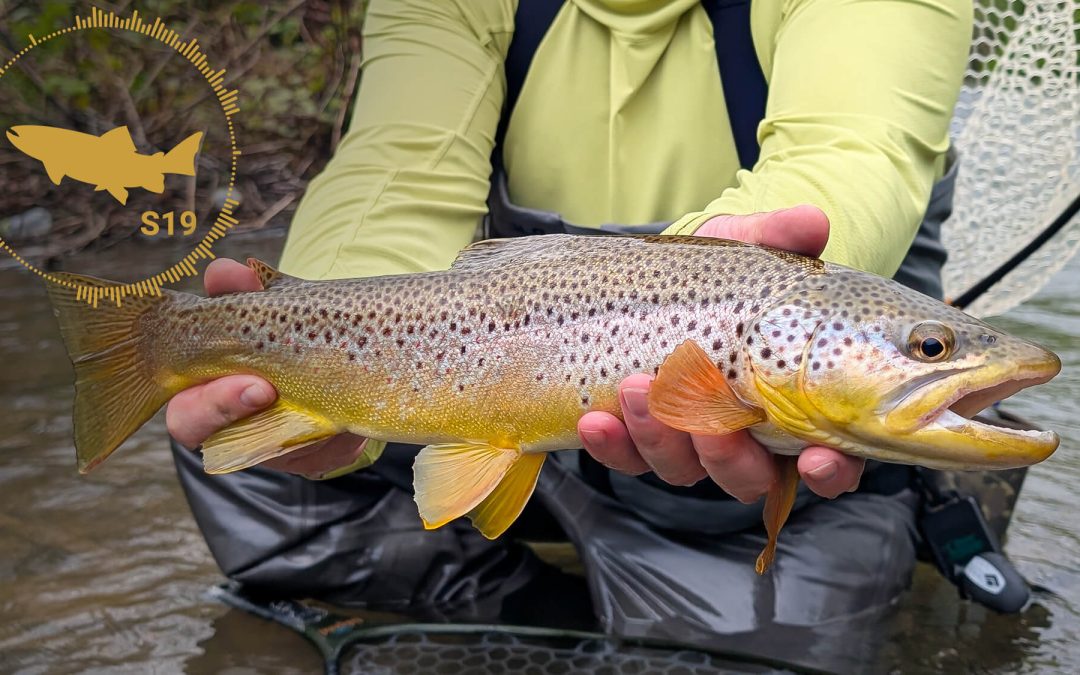
For our Season 19 Intermission, my wife, Becky, joins me to check in on what’s going on in the Troutbitten world. We talk about the upcoming leader sale in the Troutbitten Shop (May 24th), the Troutbitten Film Festival, guide season, changes to the Troutbitten Beer with New Trail Brewing Company and the Mono Rig book status. Then my son, Aiden, joins me for a short conversation about spring fishing.

Dry dropper is great. Just put a nymph under that dry fly and get the best of both worlds. Right? Not so fast . . . The idea that you can have your cake and eat it too — that you’ll get perfect drifts on the dry fly and the nymph — and that you somehow double your chances by dropping a nymph under the dry is not true. This is the big lie of dry dropper fishing.
Here’s the problem: In most cases, neither fly ends up with a great drift. Instead, both flies are compromised and their natural drift is altered.

Burnout is involuntary. It creeps up and surprises people, but I don’t think it has to. Fishing gets old because it becomes average, because some of the mystery or exploration is gone — maybe it becomes predictable. But all of that can be changed with a few intentional decisions, too.
Troutbitten is hosting a Film Festival at New Trail Brewing Company in Williamsport, Pennsylvania, and we want you to be there. We’ll gather to share fishing stories, a few beers and good times. The event will feature door prizes with gear from many of the best companies in the fly fishing world, and we’ll have awards for some of the selected films.
The Troutbitten Film Festival features genuine experiences. It’s about the woods and the water. It’s about wild places. It’s about the friendships and stories we all collect from a life on the water. It’s not about exotic locations. It’s not a big fish contest or a big camera contest. If you’re resourceful, you can create something beautiful and endearing for the Troutbitten Film Festival with your iPhone.

This conversation is all about luck on the water. Do we rely on it? Do we surrender to it? Do we look for it? From the beginning, luck and fishing were intertwined. It became part of our anglers’ lore. And while good luck has surely saved countless fishing trips, bad luck continues to doom the best laid plans of a fisherman.

This Troutbitten Skills Series and these platforms are an effort to pass along the idea that fly selection doesn’t have to be regimented or complicated. Instead, see flies for what they have in common. Find their similarities rather than their differences. Choose the elements that matter most to you. Find the components of a fly that create enough of a distinction to be the keys to a platform, and build around that idea.
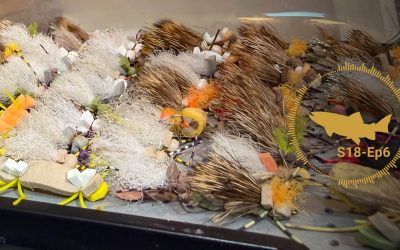
It’s time for the big-meal dry fly platform: hoppers and stoneflies. With this platform, we substitute subtlety for buoyancy. Hackle is traded in for rubber legs, and dubbing is often replaced by closed-cell foam. In this episode, we break down this big-meal platform. We’ll look at a parts list, cover some pros and cons about material choices, and look at the particulars of the platform itself.