


The Troutbitten Podcast is available everywhere that you listen to your podcasts.
** Note ** The Podcast Player, along with links to your favorite players is below.
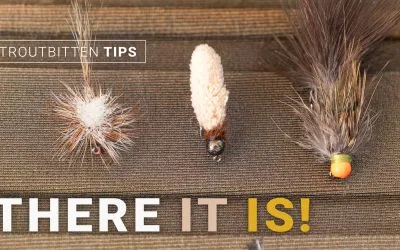
This Troutbitten Skills Series and these platforms are an effort to pass along the idea that fly selection doesn’t have to be regimented or complicated. Instead, see flies for what they have in common. Find their similarities rather than their differences. Choose the elements that matter most to you. Find the components of a fly that create enough of a distinction to be the keys to a platform, and build around that idea.
I do think some things are undeniable, and almost every angler is going to classify a parachute the same way. That might be true for upright hackles and down wings too.
But I’m sure you’ve noticed that the further we got into this season, the less specific each platform became. And again, that’s just because there are only so many things you can put on a dry fly and still have it be successful.
Most of the more recent flies designed take their cues from what came before them. Honestly, I assume that will hold true going into the future too.
My friends Bill Dell, Austin Dando and Matt Grobe join me for the conclusion of Season 18.
Resources
PODCAST: Troutbitten | Fly Tying – Essential Tools and More (S17 Ep9)
READ: Troutbitten | Pattern vs Presentation
PODCAST: Troutbitten | Fishing Dry Flies – Dry Fly Skills Series (S12)
Listen with the player above, or . . .
Find the Troutbitten podcast on any of these services:
— Apple Podcasts
— Spotify
— Google Podcasts
— Amazon Music
. . . and everywhere else where you listen to podcasts.
You can find the dedicated Troutbitten Podcast page at . . .
Season Nineteen begins in a few weeks. So look for that in your Troutbitten podcast feed.
Fish hard, friends.
** Donate ** If you enjoy this podcast, please consider a donation. Your support is what keeps this Troutbitten project funded. Scroll below to find the Donate Button. And thank you.
Enjoy the day.
Domenick Swentosky
T R O U T B I T T E N
domenick@troutbitten.com






Dedicated Richardson chest box user here. You asked if any listeners had thoughts, and do I ever. I was an inveterate fly box collector and pack-changer. Never quite satisfied with volume or convenience. The Richardson changes all that. I use it for all my dry flies – a tray for mayflies, one for caddis, one for foam flies, and then have a “working” tray for indies (so wrong to call them that, but I’m on your turf…), flies I’m swapping, rigging spools, etc. I still carry a hip pack to use for my nymph boxes, but between the two I can carry essentially every fly I would ever need, and don’t feel stressed about leaving something at home. The compartment nature of the boxes does make small dries difficult to inventory at times, but the tradeoff of having both hands free and storage for hundreds of flies is just too good. Fantastic solution that I think gets overlooked by the masses. I’m never changing.
Nice. My question is what happens in the rain? What happens when the box gets very wet, and what happens in freezing weather too? Those kind of elements have always been my concern with the Richardson. What is your experience?
Dom
In deep with Von Dando!
Definitely stays dry in the rain. It’s close to your body, so your hands, hat and body cover the open tray. If you fall deep, of course it can get wet. But that’s a pretty rare event to structure your whole plan around IMO. No issues in freezing weather. Like I said, I am super picky about my setup, and I never expected to like it this much, but the functional advantage of having that many flies at your fingertips is overwhelming. And it makes my nymph boxes better too, because I’m carrying zero dry fly boxes (which tend to be big), so I don’t wrestle with an overstuffed pack anymore.