PODCAST: Why We Fish — S13, Ep6

by | Nov 24, 2024 | 1 comment

 The Troutbitten Podcast is available everywhere that you listen to your podcasts.

** Note **  The Podcast Player, along with links to your favorite players is below.

Tonight we’re here to talk about why we fish. It’s a simple question. Why do we commit so much of our free time and efforts, our thoughts and our daydreams . . . to fishing?

Why, after all these years, do we keep coming back?

Why, when we could do hundreds of other things — with three hours on a weekday evening or every daylight hour on a Saturday, from dawn to dark — why do we choose to lace up the boots and string up the fly rod?

In all the seasons of this Troutbitten podcast, we’ve often said that fishing, for us, isn’t about hoping to get lucky out there. It’s about making something happen. And surely, the act of fishing is a wonderful draw. But as I talked with the Troutbitten guys a few days ago about this topic of why we fish, it was clear their most important answers really didn’t have that much to do with the actual fishing.

So what we’ll talk about tonight are more of the intangible qualities of fishing. It’s what I think many anglers imagine when they decide to pick up a rod and venture into the woods. Yes, all of us are quickly captivated by the details, the flies, the flows, and the tactic necessary to catch trout. But perhaps for most anglers, it’s that elusive, almost transcendental experience that draws us in today, yesterday and tomorrow. And it’s the same natural pursuit that brought us all down to the water from the beginning.

We’re here to talk about it.

Resources

READ: Troutbitten | How To Stay in the Fly Fishing Game for a Lifetime
READ: Troutbitten | We Wade
READ: Troutbitten | Lost Fishing Friends

Listen with the player above, or . . .

Find the Troutbitten podcast on any of these services:

— Apple Podcasts
— Spotify
— Google Podcasts
— Amazon Music
. . . and everywhere else where you listen to podcasts.

You can find the dedicated Troutbitten Podcast page at . . .

podcast.troutbitten.com

Season Thirteen of the Troutbitten Podcast continues next week with episode seven. So look for that in your Troutbitten podcast feed.

Fish hard, friends.


** Donate ** If you enjoy this podcast, please consider a donation. Your support is what keeps this Troutbitten project funded. Scroll below to find the Donate Button. And thank you.


Enjoy the day.
Domenick Swentosky
T R O U T B I T T E N
domenick@troutbitten.com


Share This Article . . .

Since 2014 and 1500+ articles deep
Troutbitten is a free resource for all anglers.
Your support is greatly appreciated.

– Explore These Post Tags –

Domenick Swentosky

Central Pennsylvania

Hi. I’m a father of two young boys, a husband, author, fly fishing guide and a musician. I fish for wild brown trout in the cool limestone waters of Central Pennsylvania year round. This is my home, and I love it. Friends. Family. And the river.

More from this Category

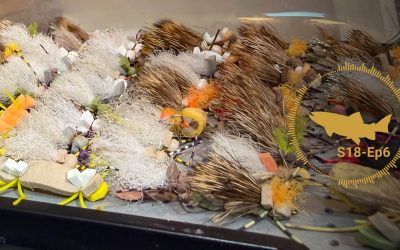
PODCAST: Dry Fly Platforms – Hoppers, Stones and Foams- The Troutbitten Fly Box (S18, Ep6)

PODCAST: Dry Fly Platforms – Hoppers, Stones and Foams- The Troutbitten Fly Box (S18, Ep6)

It’s time for the big-meal dry fly platform: hoppers and stoneflies. With this platform, we substitute subtlety for buoyancy. Hackle is traded in for rubber legs, and dubbing is often replaced by closed-cell foam. In this episode, we break down this big-meal platform. We’ll look at a parts list, cover some pros and cons about material choices, and look at the particulars of the platform itself.

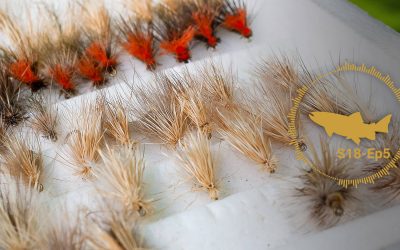
PODCAST: Dry Fly Platforms – Emergers – The Troutbitten Fly Box (S18, Ep5)

PODCAST: Dry Fly Platforms – Emergers – The Troutbitten Fly Box (S18, Ep5)

A dry fly emerger is one that has part of the fly underneath the surface. It’s a highly effective form (meaning tout eat it) because it matches the most vulnerable state of things that trout see.

In this episode we cover the dry fly platform of emergers. We look at what they are, how and why to use them and the differences in styles within this platform. We cover some history about how emerger design got to this point and what the future might hold.

PODCAST: Dry Fly Platforms – Down Wings – The Troutbitten Fly Box (S18, Ep4)

PODCAST: Dry Fly Platforms – Down Wings – The Troutbitten Fly Box (S18, Ep4)

The down wing dry fly style is a perfect match for one of the most ubiquitous insects found in trout rivers across the planet: caddis. The down wing platform is also a first choice for matching many terrestrials, like moths and hoppers, and it finds it’s way to stonefly patterns as well.

But for this discussion, we cover the down wing and its progression into fly boxes, by looking at three standouts: the Elk Hair Caddis, the X-Caddis and the CDC & Elk. Because the arrival of each of these patterns brought forth major innovations to the world of dry flies. All three of these are down wings, but they are very different players on the water.

PODCAST: Dry Fly Platforms – Comparaduns – The Troutbitten Fly Box (S18, Ep3)

PODCAST: Dry Fly Platforms – Comparaduns – The Troutbitten Fly Box (S18, Ep3)

With its simple form of wing, body and tail, the Comparadun is another template for the dry fly angle — another perfectly adaptable platform.

When the Comparadun hit the scene in the 1970’s, it was a significant departure from the norm. Anglers recognized this, but more importantly, the trout recognized this. The Comparadun became a hatch matcher. It became the closer, because the Comparadun specialized in fooling selective trout, with perhaps the most realistic profile of a mayfly out there.

The unique design of the Comparadun caught on quickly, because, once again, it solved problems on the water. And it’s been fooling wise River trout ever since.

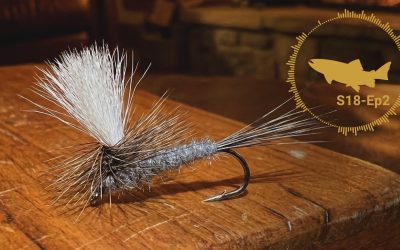
PODCAST: Dry Fly Platforms – Parachutes – The Troutbitten Fly Box (S18, Ep2)

PODCAST: Dry Fly Platforms – Parachutes – The Troutbitten Fly Box (S18, Ep2)

The parachute platform is our favorite style of dry fly and the favorite of many other anglers, because of its utility. Because it form is functional. Because it casts well, lands upright and keeps floating, even though heavy water. It fools picky trout and looks enough like an emerger and a spinner that you might get away with one fly, all the way through cycle. It’s a great dry-dropper fly, it’s easily adaptable. And perhaps its best quality . . . you can see the parachute post.

What do you think?

Be part of the Troutbitten community of ideas.
Be helpful. And be nice.

1 Comment

  1. Well, that’s a first. Now I can finally say I’ve choked up while listening to a fishing podcast. Outstanding contribution to the conversation, gentleman. Thank you.

    “Good stuff”

    Reply

Submit a Comment

Your email address will not be published. Required fields are marked *

Recent Articles

Recent Posts

Pin It on Pinterest