


I guess I take casting with a fly rod for granted. It’s not that I’m some fantastic caster or that I don’t have my struggles. But in truth, I can usually put the fly where I want it. And after all these years watching good and bad casting from other anglers, I believe the difference comes down to one key element — speed.
My own education happened naturally. Over a period of years, fishing day in and day out, I developed a casting technique and style that works for me. But it took time, and I know that not everyone has such a luxury. Inevitably, for the anglers I meet who struggle to cast a fly, whether working with a dry line, tight line nymphing, or casting wets and streamers, it comes down to one thing — they aren’t aggressive enough.
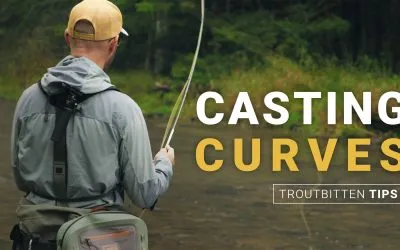
The fly rod needs an angler to take control and be bossy. Good casting requires acceleration between 10:00 and 2:00, with hard, deliberate stops at those points. That’s what I mean by aggressive. The cast should be crisp. It must stop between two positions, and it must stop with purpose. The casting stroke should never be lazy, and it should not be cautious. Otherwise, fly placement and accuracy falls apart.
As we approach overhanging limbs near a riverbank, being cautious is the worst thing to do. Caution is accompanied with a slowdown of the rod speed. And when we’re too careful, the line loops open up, the leader sails high and the fly sticks in a tree.
Speed | Force | Flex
Decades ago, my Dad was the first friend whom I ever taught to cast a fly rod. And his trouble was the same as what I still see every day while guiding clients. Most people who cast a fly just aren’t aggressive enough. All good fly casting needs acceleration and hard stops at 10:00 and 2:00. I touched on this before in a Fifty Tips article, but the point here is to be deliberate. Be confident. It’s not enough to stop at 10:00 and 2:00. Between those stops there should be purpose, speed and force to get the rod flexing. That’s how we take control of the cast. And that’s how we place the fly exactly where it needs to go.
I may have lucked into learning all this. When I look back at my own history, I realize that a lot of things lined up for me, charting a logical course toward a full picture of the fly fishing game.
My fly fishing experiences started on small waters. I fished for wild brookies and brown trout in the headwaters. I explored brushy, woodsy streams with my Border Collie, on an endless quest for new adventures. Those wild places filled me up inside. The vacant, lonesome and deep woods of Pennsylvania forests were a refuge — and they taught me good fly casting.
I used a short, seven foot leader with a four or five weight fly line. And I learned to punch the line and leader under branches and guide the fly toward a target, around wet logs and greedy limbs. I quickly realized the concept of 10:00 and 2:00 was only a starting point. I cast sidearm and backhand, with circle casts, water hauls, roll casts and whatever angles necessary to boss the line, leader and fly toward one point on the water.
READ: Troutbitten | One Great Nymphing Trick
Regardless of the particular type of cast, I learned that it should be done with force and purpose. There must be speed and acceleration in the cast, accompanied by crisp, clean stops. Anything less, and I ended up in the trees. If I cast softy — if I was too cautious — I was asking for trouble.
Now, all these years later, this is still my best fly casting tip. Whatever you’re casting (dries, nymphs, wets or streamers), do it with some speed in between two points. Cast with authority. Don’t be the butterfly. Be the bee.
Fish hard, friends.
Enjoy the day.
Domenick Swentosky
T R O U T B I T T E N
domenick@troutbitten.com




Dom,
Do you have any backyard drills to work on speed and accuracy? I was just going to place a couple of pie tins at 30 and 40 feet and get busy.
Thanks,
Scott
Hi Scott,
Yeah, you could put targets out. But honestly, if the goal is to work on your speed, then watch your line above you. See that you make nice parallel loops. Those only come from acceleration and good stops. Accuracy will follow that.
Hope that helps.
Cheers.
Dom